


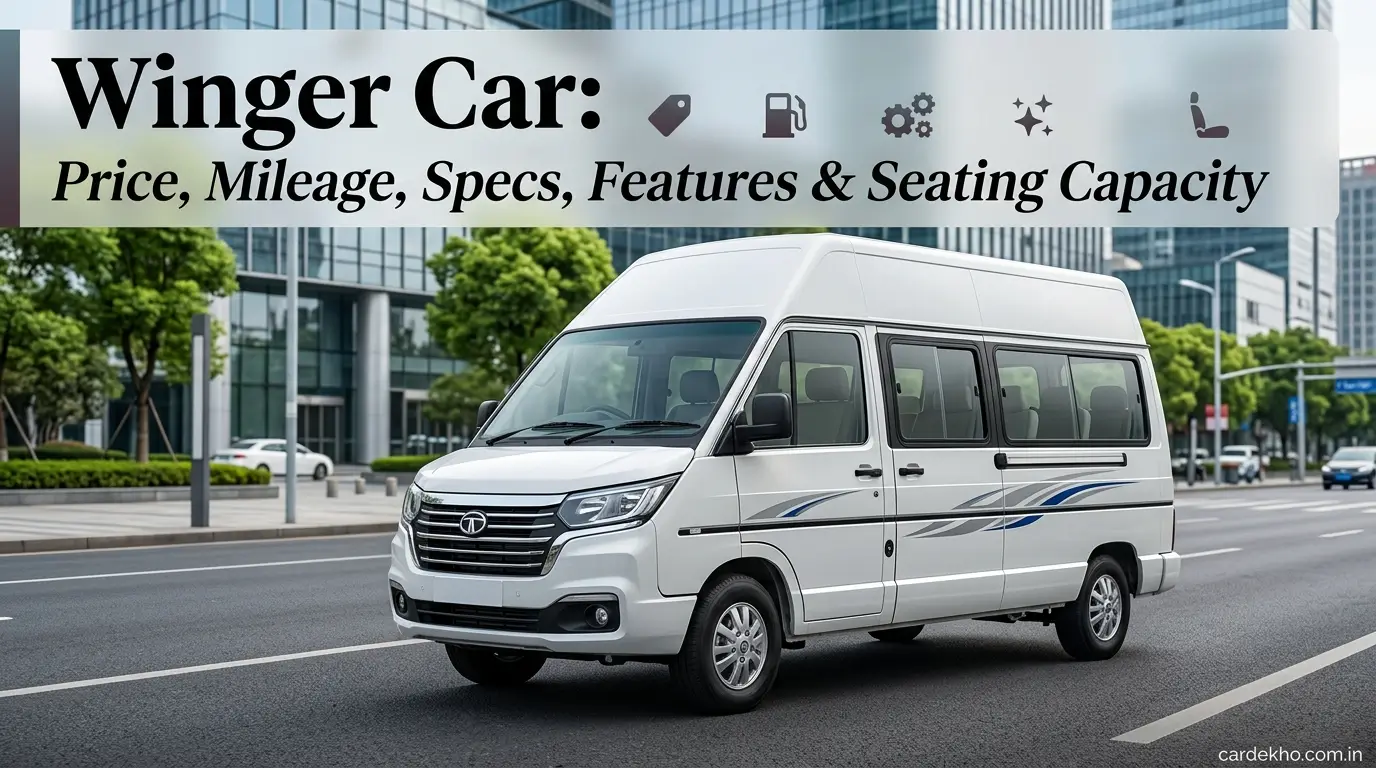
Welcome to CarDekho. The Winger car is a popular passenger vehicle for people who need more space than a regular car. It is commonly used for tourism, school transport, staff transportation, and other commercial purposes. With its spacious cabin and practical design, it can comfortably carry several passengers. Different Winger models come with different seating capacities, engines, features, and dimensions, so it is important to check the exact variant before buying.
In this guide, we will cover the main things you need to know about the Winger car, including its price, engine, mileage, seating capacity, dimensions, interior, safety features, variants, advantages, disadvantages, and buying tips. Whether you are a business owner, tour operator, fleet manager, or private buyer, this information will help you understand the Winger better and choose the right model for your needs.
What Is a Winger Car?
The Winger is a passenger-focused vehicle that offers more seating and interior space than a normal car. It is mainly designed for carrying groups of people and is commonly used for tourism, school transport, employee transportation, passenger services, and healthcare purposes. Different versions may have different seating arrangements and features based on their intended use, making the Winger a practical and flexible choice for businesses and transport operators.
Why Is the Winger Popular?
The main attraction of the Winger is its combination of passenger space, practicality, and versatility. It provides enough room for multiple passengers while maintaining a design that is relatively easy to operate compared with larger buses.
It can also be adapted for different purposes. A passenger version may be suitable for tourism, while other configurations can be used for school transportation, staff movement, or healthcare services. This makes the Winger a practical option for organizations that need one vehicle platform for different transportation requirements.
Winger Car Price
The price of a Winger car depends on several factors, including the model year, seating configuration, equipment, location, taxes, and whether the vehicle is new or used. Commercial vehicles can also have different prices depending on their intended application and body configuration. Before buying, it is better to compare the exact variant rather than relying on one general Winger price. Registration charges, insurance, taxes, and other costs can also increase the final amount paid by the buyer.
New Winger Price
A new Winger normally costs more than an older used model because it comes with a newer engine, updated equipment, warranty coverage, and potentially improved safety and comfort features. The manufacturer’s listed price may also differ from the final on-road price.
Buyers should check the latest official price for their specific market and configuration. Dealer charges, registration fees, taxes, and optional equipment should be considered when calculating the complete purchase cost.
Used Winger Price
The used Winger market can offer more affordable options, but the condition of the vehicle is extremely important. Two vehicles of the same model year can have very different prices because of their mileage, maintenance history, accident record, and mechanical condition.
Before purchasing a used model, inspect the engine, transmission, suspension, brakes, tyres, air conditioning, interior, and documents. A lower purchase price may not be a good deal if the vehicle requires expensive repairs soon after purchase.
Winger Car Engine and Performance
The engine is one of the most important parts to consider when choosing a Winger. Different generations and configurations can have different engine specifications, so buyers should confirm the details of the exact model they are considering.A diesel engine is generally useful for a passenger vehicle because it can provide good low-speed pulling power when the vehicle is carrying several passengers. However, actual performance depends on the engine, transmission, passenger load, road conditions, and maintenance.
Winger Engine Specifications
Depending on the model and generation, specifications can include differences in engine displacement, power, torque, fuel system, and transmission. For this reason, it is better to check the manufacturer’s specifications for the exact variant instead of assuming that every Winger has the same engine.
The most important specifications to compare are engine capacity, maximum power, torque, transmission type, fuel type, and fuel tank capacity. These figures help buyers understand how the vehicle may perform under both city and highway conditions.
Winger Driving Performance
The Winger is designed more for practical passenger transportation than sporty performance. Its driving characteristics are influenced by its larger size and heavier body compared with a normal passenger car.
With several passengers onboard, acceleration can naturally feel slower than when the vehicle is lightly loaded. However, good torque, proper suspension, and power-assisted steering can make it practical for regular city and highway use. Drivers should also allow more space for braking, turning, and parking.
Read also: HR88B8888 Car: Price, Details, Number Plate & Full Guide
Winger Mileage and Fuel Economy
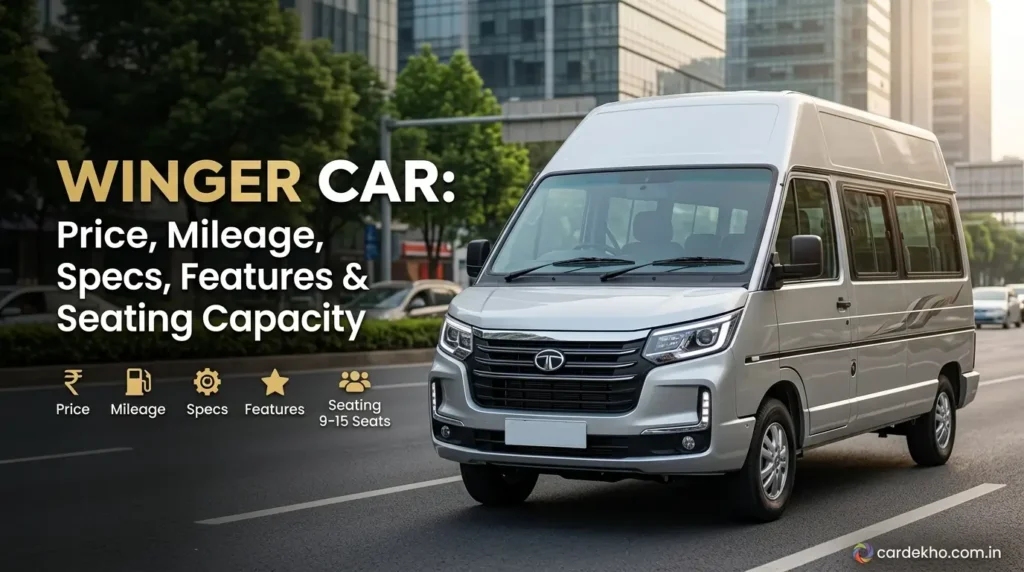
Winger mileage depends on factors such as passenger load, traffic, road conditions, driving style, air conditioning, tyre pressure, and vehicle maintenance. A fully loaded Winger driving in heavy city traffic will usually use more fuel than a lightly loaded vehicle traveling on open highways. Regular servicing, proper tyre pressure, and smooth driving can help improve fuel economy and keep running costs under control.
How to Improve Winger Mileage
There are several simple ways to improve fuel economy:
- Maintain the recommended tyre pressure.
- Avoid unnecessary engine idling.
- Service the engine on schedule.
- Keep the air filter clean.
- Avoid carrying unnecessary weight.
- Use smooth acceleration and braking.
- Check the vehicle’s wheel alignment regularly.
- Keep the air-conditioning system properly maintained.
Small improvements in driving habits can make a noticeable difference for commercial vehicles that cover many kilometres every day.
Winger Seating Capacity
One of the main advantages of the Winger is its ability to carry several passengers, but the seating capacity varies by model and configuration. Different versions may be designed for tourism, school transport, staff transportation, or other uses. Buyers should check the official seating arrangement of the specific model and also consider luggage space, especially when the vehicle will be used for long trips or regular passenger transport.
Passenger Seating Configurations
Different seating layouts can be designed around different transportation needs. A tourism-focused version may prioritize passenger comfort and luggage, while a school configuration may focus more on efficient seating capacity.
Businesses should choose the configuration according to their daily requirements. Carrying more passengers is not always better if it reduces comfort or leaves insufficient space for luggage and equipment.
Is Winger Comfortable for Long Trips?
The Winger can be a practical choice for longer journeys because of its larger cabin and passenger-oriented design. Adequate legroom, headroom, comfortable seats, ventilation, and air conditioning can make a significant difference during extended trips.
For tourism and staff transportation, buyers should pay particular attention to seat quality, cabin ventilation, entry and exit points, and available luggage space. These details can have a major impact on passenger satisfaction.
Winger Car Dimensions and Ground Clearance
The dimensions of a Winger vary according to the particular model and configuration. Important measurements include overall length, width, wheelbase, ground clearance, and fuel tank capacity.
| Specification | Details |
| Vehicle Type | Passenger Van |
| Fuel Type | Diesel |
| Seating | Variant dependent |
| Length | Variant dependent |
| Width | Variant dependent |
| Wheelbase | Variant dependent |
| Ground Clearance | Variant dependent |
| Fuel Tank | Variant dependent |
The vehicle’s size is important when driving in crowded cities or parking in smaller spaces. Ground clearance is also useful on uneven roads, speed breakers, and rough surfaces. Buyers should check the exact dimensions before purchasing, particularly if the vehicle will regularly operate in narrow streets or restricted parking areas.
Winger Interior and Comfort Features
The Winger has a spacious interior designed mainly for passenger transportation, offering more room and flexible seating than a regular car. Depending on the variant, it may include comfortable seats, air conditioning, power steering, useful storage areas, practical entry points, and easy-to-use driver controls. Features can vary between models, so buyers should check the equipment available in the specific version they are considering.
Interior Features
Important interior features to consider include:
- Passenger seating
- Driver seat adjustment
- Dashboard layout
- Cabin storage
- Air conditioning
- Entry doors
- Visibility
- Passenger access
- Luggage space
The exact equipment should always be confirmed for the specific variant because commercial vehicles can have different specifications depending on their purpose.
Passenger Comfort
Comfort becomes especially important when a Winger is used for tourism, employee transportation, school services, or long-distance travel. Passengers may spend several hours inside the vehicle, making seating, ventilation, legroom, and cabin temperature important considerations.
A well-maintained interior can also improve the overall experience and help a commercial operator maintain a professional image. For businesses, passenger comfort can directly affect customer satisfaction and repeat use.
Winger Safety Features
Safety is an important factor when buying a Winger, especially because it is designed to carry multiple passengers. Depending on the model and configuration, it may include features such as ABS, seat belts, reliable braking systems, emergency exits, and other safety equipment. However, features can vary by model year and variant, so buyers should always check the official specifications of the exact vehicle before making a purchase.
Safety Tips for Winger Owners
Regular maintenance is essential for a passenger vehicle that may carry many people every day. Owners should inspect the brakes, tyres, suspension, steering system, and seat belts regularly.
It is also important to avoid overloading the vehicle. Passengers should be seated safely, doors and emergency exits should remain functional, and the vehicle should receive scheduled servicing. Good driving habits are equally important for passenger safety.
Winger Variants and Uses
The Winger is a flexible vehicle designed to meet different transportation needs. Its various configurations allow businesses and organizations to choose a model based on passenger capacity, comfort, features, and intended use. It can be used for tourism, school transport, staff transportation, passenger services, and other commercial purposes. This flexibility makes the Winger a practical choice for businesses that need reliable group transportation.
Winger Passenger Van
The passenger version is designed for transporting groups of people. It can be useful for private passenger services, tourism companies, hotels, and businesses that need regular group transportation.
Its larger cabin provides more seating space than a conventional car, making it practical when a company needs to move several passengers in one vehicle.
Winger School Van
A school-focused configuration can be used for transporting students between homes and educational institutions. For this application, seating capacity, safety equipment, reliable maintenance, and proper supervision are especially important.
Schools and transport operators should choose a configuration that provides adequate space without exceeding the manufacturer’s recommended passenger capacity.
Winger Tourist Van
Tour operators can use the Winger for airport transfers, hotel transportation, sightseeing trips, and intercity travel. Passenger comfort and luggage space are particularly important in this application.
For tourism businesses, fuel economy and reliability also matter because the vehicle may cover long distances and operate for many hours each day.
Winger Ambulance
The Winger platform can also be configured for healthcare and ambulance applications. Such versions can be equipped according to medical transportation requirements and may include dedicated space for patients and medical equipment.
The exact equipment depends on the specific ambulance configuration, so buyers should check the specifications and certification requirements applicable to their market.
Staff Transportation
Companies can use a Winger to transport employees between offices, factories, residential areas, and workplaces. This can be more practical than using several smaller vehicles.
For staff transport, operators should consider daily distance, passenger numbers, fuel costs, maintenance, and employee comfort before selecting the appropriate configuration.
Advantages and Disadvantages of a Winger Car
| Category | Advantages | Disadvantages |
| Space & Seating | Spacious passenger cabin with multiple seating configurations | Larger than a conventional car |
| Transportation | Suitable for commercial transportation, tourism, and staff transport | More difficult to park in tight spaces |
| Passenger Capacity | Large passenger-carrying capacity for group travel | Fuel consumption can increase with heavy loads |
| Versatility | Can be adapted for specialized uses | Equipment varies between configurations |
| Business Use | Suitable for businesses and fleet operators | Higher running costs with heavy commercial use |
| Maintenance | Practical for regular passenger transportation | Maintenance can become expensive if neglected |
| Driving | Useful for long-distance and group travel | Driving characteristics differ from a normal car |
Who Should Buy a Winger?
The Winger can be a good choice for tour operators, schools, hospitals, hotels, companies, fleet operators, passenger transport businesses, and larger families that regularly need to transport several passengers. Its spacious cabin and commercial-focused design make it suitable for group travel and business use, although buyers should consider whether a passenger van is practical for everyday driving. For people who mainly drive alone or frequently travel through crowded city streets, a conventional car may be easier and more economical to operate. Overall, the Winger is most suitable when passenger capacity, space, and commercial practicality are the main priorities.
Things to Check Before Buying a Used Winger
Buying a used Winger requires more inspection than simply checking its exterior appearance. Commercial passenger vehicles can accumulate significant mileage and may experience heavier wear because of frequent use.
Mechanical Inspection
Before purchasing, have a qualified mechanic check:
- Engine condition
- Transmission
- Suspension
- Brakes
- Steering
- Cooling system
- Air conditioning
- Engine oil and leaks
- Battery
- Tyres
A proper test drive should also be performed to identify unusual sounds, vibration, poor braking, steering problems, or transmission issues.
Exterior and Interior Inspection
Check the body for accident repairs, rust, paint differences, damaged doors, broken windows, and other signs of previous damage.
Inside the vehicle, inspect the seats, dashboard, air conditioning, interior panels, floor, lights, door mechanisms, and storage areas. Heavy wear can provide clues about how intensively the vehicle was previously used.
Documents and Ownership
Always verify the vehicle’s registration and ownership documents before completing the purchase. The chassis and engine numbers should match the official records.
Also check available service history, taxes, insurance, previous ownership, and any outstanding legal or financial issues. Proper documentation can help prevent problems after the purchase.
Winger Car vs Other Passenger Vans
The Winger competes with other passenger vans and commercial vehicles, but the right choice depends on the buyer’s requirements.
| Factor | Winger | Other Passenger Vans |
| Passenger Capacity | Variant dependent | Variant dependent |
| Comfort | Good | Varies |
| Engine | Diesel options | Varies |
| Commercial Use | Excellent | Varies |
| Tourism | Suitable | Depends on model |
| Maintenance | Model dependent | Model dependent |
| Best For | Passenger transport | Application dependent |
Instead of choosing a vehicle only because it has more seats, buyers should compare engine performance, fuel economy, maintenance costs, comfort, safety equipment, spare-parts availability, and after-sales support.
For a business, the total operating cost can be more important than the initial purchase price. A vehicle that costs slightly more but offers better reliability and lower running costs may provide better long-term value.
Is the Winger Car Worth Buying?
The Winger can be worth considering when the main requirement is transporting several passengers in a practical and relatively comfortable vehicle, making it suitable for tourism, schools, staff transportation, passenger services, and other commercial operations. However, buyers should carefully select the right configuration, as engine specifications, seating capacity, features, price, and equipment can vary between versions.
Before purchasing, it is important to compare the purchase price, fuel consumption, maintenance costs, passenger requirements, and expected daily usage. For commercial buyers, calculating the expected running costs is especially important because the best Winger is not necessarily the cheapest option, but the one that offers the right balance of passenger capacity, comfort, reliability, and operating costs.
Frequently Asked Questions About Winger Car
What is a Winger car?
A Winger is a passenger-focused van designed to transport multiple people. It is commonly used for tourism, staff transportation, school services, passenger transport, and specialized applications.
How many passengers can a Winger carry?
The seating capacity depends on the specific Winger variant and seating configuration. Buyers should check the manufacturer’s specifications for the exact model before making a decision.
What engine does the Winger have?
Engine specifications vary between Winger generations and configurations. Important specifications to compare include engine displacement, fuel type, power, torque, and transmission.
What is the mileage of a Winger?
Winger mileage depends on the variant, passenger load, road conditions, traffic, driving style, air-conditioning use, and maintenance. Real-world fuel economy can therefore differ from claimed figures.
Is Winger good for tourism?
Yes, a Winger can be suitable for tourism because it offers passenger space and can be configured for group transportation. Its suitability depends on seating, luggage requirements, comfort, fuel economy, and the specific model.
Conclusion
The winger car is designed for people and businesses that need more passenger space than a conventional car can provide. Its different configurations make it useful for tourism, school transportation, staff transport, passenger services, and specialized applications. Engine specifications, mileage, seating capacity, and features can vary depending on the model and configuration.
Before buying, focus on the exact variant rather than the Winger name alone. Compare its price, fuel economy, seating, safety equipment, maintenance requirements, and intended use. For commercial operators, a properly selected and well-maintained Winger can be a practical solution for regular passenger transportation.
