

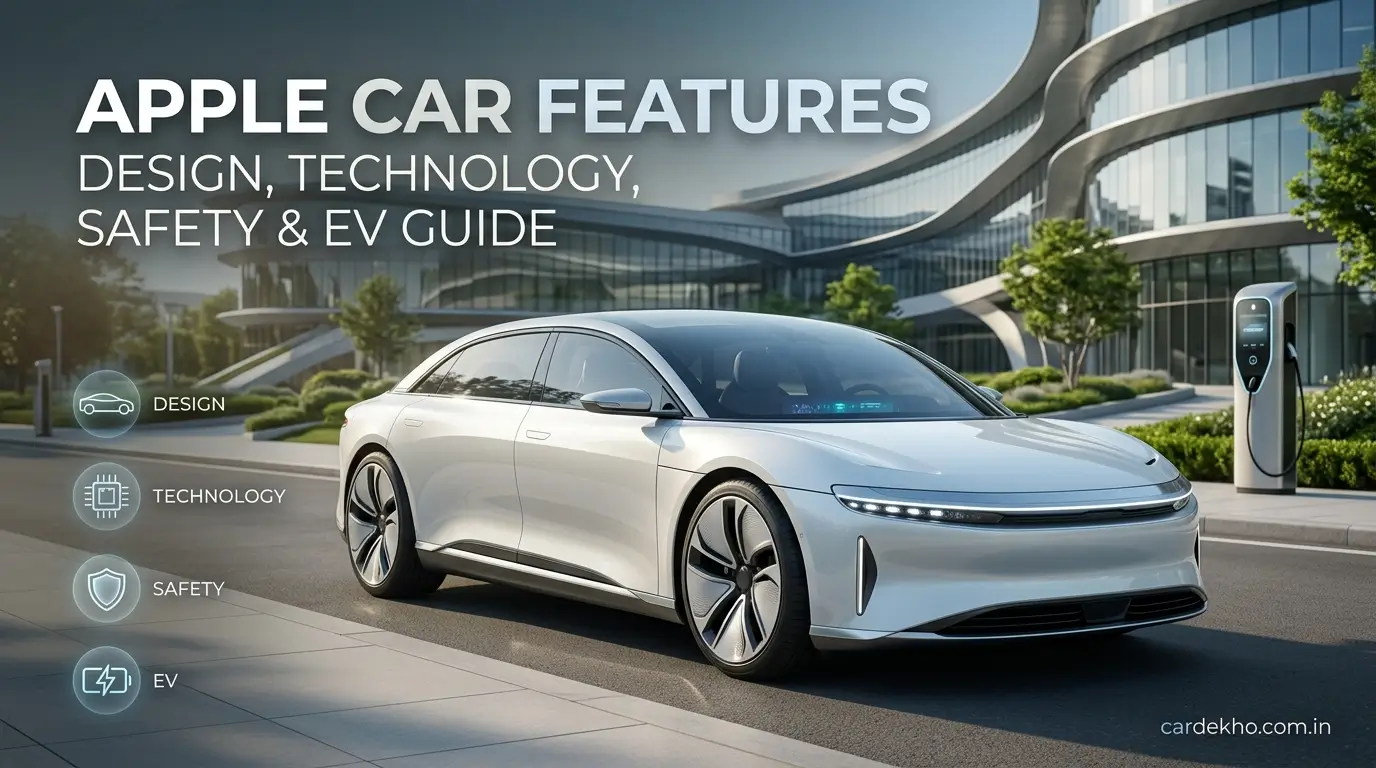
Welcome to CarDekho. The Apple Car Features concept attracted widespread attention because Apple was reportedly developing an electric vehicle with advanced technology, intelligent software, and autonomous driving capabilities. Known internally as Project Titan, the project was expected to bring Apple’s focus on simple design, user-friendly interfaces, and connected technology to the automotive industry. Reports suggested that the vehicle could feature a digital interior and a different approach to the traditional driving experience.
However, Apple never launched an Apple-branded production car. The company canceled its electric vehicle project in 2024 after years of development, leaving many reported specifications unconfirmed. Apple’s automotive technology remains relevant through products such as CarPlay Ultra, which brings its software more deeply into compatible vehicles. Understanding the difference between reported Apple Car features and confirmed Apple technology helps readers separate historical reports from products available today.
What Was the Apple Car Project?
The Apple Car was a reported electric vehicle project developed under the internal name Project Titan. Apple was believed to have worked on it for several years, with its goals changing throughout development. Early reports focused heavily on autonomous driving, while later reports suggested a shift toward a vehicle with more limited driving assistance. Developing a car is considerably more complex than creating a smartphone or computer. It requires vehicle engineering, manufacturing facilities, safety testing, battery technology, regulatory approval, supply-chain management, and long-term service support. These challenges made Project Titan a major undertaking for Apple.
What Was Project Titan?
Project Titan was the name associated with Apple’s automotive research and development efforts. Reports linked the project to electric vehicles, autonomous driving, artificial intelligence, advanced sensors, vehicle software, and innovative interior technology.
Apple never published a final list of Apple Car specifications. Details about battery capacity, driving range, motor power, charging speed, interior dimensions, and autonomous-driving capabilities therefore remain unconfirmed.
Is the Apple Car Still Coming?
No. Apple canceled its reported electric vehicle project in February 2024. Reuters reported that employees working on the project would move to other areas, including artificial intelligence.
There is no confirmed Apple Car release date, production model, or Apple-branded electric vehicle available to consumers. Older articles may still mention expected launch dates, but those predictions never resulted in a released vehicle.
Apple Car Features Reported During Project Titan
Although the Apple Car never reached production, several technologies were repeatedly associated with Project Titan. These reported features offer an idea of the vehicle Apple may have been developing, but they should be treated as reported plans rather than confirmed production specifications.
Autonomous Driving Technology
Autonomous driving was one of the main technologies associated with Project Titan. Early reports suggested Apple was interested in developing a highly automated vehicle, while later reports indicated a shift toward advanced driver-assistance technology.
The proposed system could have combined cameras, sensors, artificial intelligence, mapping, and onboard computing to monitor road conditions and assist with driving. However, Apple never released the vehicle, so its actual level of driving automation was never confirmed.
Electric Powertrain and Battery Technology
The Apple Car was widely reported to be an electric vehicle, making an electric powertrain a central part of the project. An EV platform could have allowed Apple to focus on battery management, software integration, electronic systems, and a quiet driving experience.
Apple never officially announced the proposed vehicle’s battery capacity, motor output, charging time, or driving range. Specific figures published online should therefore not be presented as confirmed Apple Car specifications.
Advanced Displays and Digital Dashboard
An advanced digital dashboard would have suited Apple’s experience in display technology and software design. The proposed vehicle could have used digital screens for navigation, vehicle information, entertainment, and other driving-related functions.
A software-focused dashboard might also have offered a more personalized experience than traditional gauges and controls. However, Apple never revealed a final production dashboard, so online images and design specifications should be treated as concepts or reported ideas rather than official designs.
Safety and Driver Assistance
Safety would have been essential to any Apple vehicle, particularly one associated with advanced driver assistance. Modern vehicles can use cameras, sensors, electronic controls, and braking systems to help drivers monitor their surroundings and respond to potential hazards.
Apple’s reported interest in autonomous technology made safety an important part of the project’s development. Nevertheless, no official Apple Car crash-test results, safety ratings, or final production safety specifications were released because the vehicle never reached the market.
Read also: MG Gloster Car Specifications: Engine, Mileage, Features & Dimensions
Apple Car Interior and User Experience
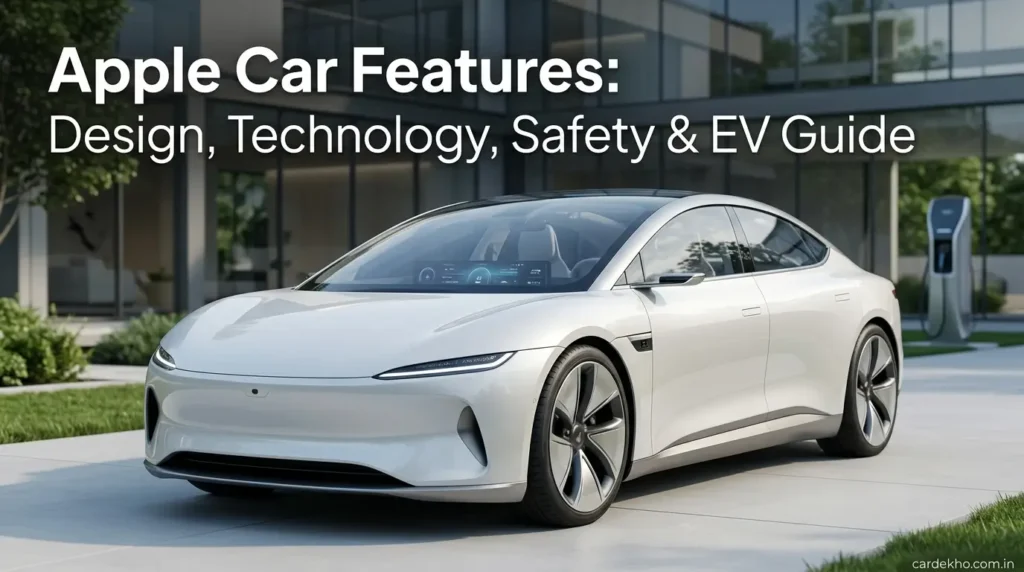
The interior could have been one of the most distinctive aspects of an Apple vehicle. A clean design, intuitive controls, and close integration between hardware and software might have created a connected driving experience. Navigation, entertainment, communication, voice control, and vehicle information could potentially have been brought together through a single interface.
Apple Ecosystem Integration
Deep integration with the Apple ecosystem would have been a natural expectation. An iPhone could potentially have worked alongside the vehicle for navigation, communication, entertainment, digital keys, and other connected functions.
Apple already offers automotive features through CarPlay and digital car keys on supported vehicles. Depending on the vehicle, a compatible iPhone or Apple Watch can be used to unlock and start the car. These existing technologies demonstrate how Apple devices can work with automotive systems without Apple manufacturing the vehicle itself.
Smart Infotainment and Voice Controls
Voice controls could have played an important role in an Apple-focused vehicle. Siri already supports tasks such as navigation, communication, and media control through compatible CarPlay systems.
A dedicated Apple Car might have extended voice interaction to additional vehicle functions. Drivers could potentially have used voice commands for everyday tasks while keeping their attention on the road. However, the exact voice-control features planned for Project Titan were never officially confirmed.
Futuristic and Minimalist Cabin
A minimalist cabin was another common expectation surrounding the Apple Car. Concept designs often showed large digital displays, fewer traditional controls, and a clean interior focused on technology and comfort.
However, many Apple Car images circulating online were created by independent designers or media outlets. They do not represent an official Apple product. Since the company never released a production vehicle, its final interior design remains unknown.
Apple CarPlay Ultra and Apple’s Current Automotive Technology
Although Apple canceled Project Titan, its work in automotive software continues. CarPlay Ultra represents a more integrated version of Apple’s in-car software experience, bringing familiar Apple features to compatible vehicle displays.CarPlay Ultra is designed to work across multiple screens, potentially including the central infotainment display and instrument cluster. It can combine iPhone features, navigation, media, widgets, and selected vehicle information within the vehicle’s interface. However, CarPlay Ultra is not the Apple Car. It is a software platform for compatible vehicles manufactured by other automakers, not an Apple-branded electric vehicle.
What Is CarPlay Ultra?
CarPlay Ultra is Apple’s next-generation in-car software experience. Traditional CarPlay primarily focuses on the vehicle’s infotainment screen, while CarPlay Ultra can extend across additional displays, including the instrument cluster in supported vehicles.
The system can combine information from the driver’s iPhone with selected information from the vehicle. Automakers can also customize parts of the interface to maintain their own design identity while supporting Apple’s connected experience.
Key CarPlay Ultra Features
CarPlay Ultra can display information such as vehicle speed, fuel level where applicable, and other supported vehicle data. It can also integrate Apple Maps, media, Siri, widgets, and other familiar Apple features across compatible displays.
On supported vehicles, the system can provide access to selected controls, including climate settings and radio functions. Drivers may interact through touchscreens, physical controls, or Siri, depending on the vehicle. Available features vary by automaker and model.
Apple CarPlay vs. CarPlay Ultra
| Feature | Apple CarPlay | CarPlay Ultra |
| Center infotainment display | Yes | Yes |
| Apple Maps | Yes | Yes |
| Siri | Yes | Yes |
| Music and media | Yes | Yes |
| Instrument cluster integration | Depends on the vehicle | More extensive integration on supported vehicles |
| Vehicle information | Depends on the vehicle | Deeper integration on supported vehicles |
| Climate controls | Vehicle dependent | Supported on compatible vehicles |
| Widgets | Supported features vary | Integrated across supported displays |
| Vehicle-specific controls | Depends on the vehicle | More extensive on supported vehicles |
Apple Car Features: Reported vs. Confirmed
It is important to distinguish reported Apple Car features from technology Apple has actually released. Project Titan involved years of reported automotive research, but Apple never announced a completed consumer vehicle with official specifications.
| Feature | Status |
| Electric powertrain | Reported direction for Project Titan |
| Autonomous driving | Reported development focus |
| Advanced vehicle software | Reported |
| Advanced digital displays | Reported or expected |
| Apple-branded production car | Project canceled |
| Official Apple Car specifications | Never released |
| CarPlay Ultra | Confirmed Apple automotive technology |
This distinction matters when reading older articles. A report may accurately describe what Apple was investigating at the time without representing the project’s final direction.
For example, autonomous driving was widely associated with Project Titan, but the reported goals changed during development. Because the project was canceled before production, there is no Apple vehicle with a confirmed autonomous-driving system to compare with today’s electric cars.
How Apple Car Technology Could Have Changed the EV Market
Although the Apple Car never reached production, its reported development highlighted several areas that could have influenced the electric vehicle industry. These included software integration, driving assistance, smartphone connectivity, and the growing role of digital interfaces in modern cars.
Software-Centered Driving Experience
Apple could have placed software at the center of the driving experience by combining navigation, entertainment, communication, vehicle information, and personalization within a unified interface.
CarPlay Ultra demonstrates part of this approach today by bringing iPhone features and selected vehicle information across multiple displays in compatible cars.
Advanced Autonomous Technology
Autonomous driving could have been another area of potential influence. Apple’s reported work involved technologies that could support vehicle automation, including artificial intelligence, computer vision, and software integration.
However, developing autonomous vehicles remains a major challenge. Such systems must respond safely to changing road conditions, weather, traffic, and local regulations. These requirements make automotive automation far more complex than developing software for a consumer electronic device.
Deeper Smartphone Integration
Smartphone integration could have been one of Apple’s strongest advantages. CarPlay already connects navigation, calls, messages, music, and Siri with compatible vehicles.
Apple also supports digital car keys for selected vehicles, allowing compatible devices to play a role in vehicle access. These technologies show how smartphone integration can extend beyond entertainment to everyday driving functions.
Software-Defined Vehicles
Modern vehicles increasingly rely on software for infotainment, connectivity, driver assistance, and selected vehicle functions. Apple’s entry into the automotive market could potentially have encouraged more manufacturers to focus on connected services and integrated digital experiences.
Even without an Apple-branded vehicle, technologies such as CarPlay Ultra demonstrate how software can influence the way drivers interact with their cars.
Apple Car vs. Modern Electric Cars
A direct specification comparison between an Apple Car and current electric vehicles would be misleading because Apple never released a production model. A more useful comparison looks at the reported Project Titan approach alongside features available across today’s EV market.
| Area | Reported Apple Approach | Modern EV Market |
| Software | Expected to emphasize ecosystem integration | Increasingly software-focused |
| Autonomous driving | Major reported development focus | Capabilities vary by manufacturer |
| Smartphone integration | Expected to be important | Available in many models |
| Digital displays | Expected to be advanced | Common in modern EVs |
| Vehicle software | Apple-centered concept | Manufacturer-specific systems |
| Connected services | Expected to be extensive | Increasingly common |
Many features associated with the Apple Car are now common across the automotive industry. Digital displays, connected apps, smartphone integration, advanced driver assistance, and over-the-air software updates are available in various modern vehicles.
However, these similarities do not confirm that current EVs use technology developed for Project Titan. They reflect broader trends in the automotive industry.
Why Was the Apple Car Project Canceled?
Apple canceled its reported electric vehicle project in 2024 after years of development, with some employees expected to move to other areas, including artificial intelligence. Developing a car requires extensive engineering, manufacturing, safety testing, supply-chain management, regulatory compliance, and long-term service support.
Project Titan also reportedly changed direction several times, particularly regarding autonomous driving, making it challenging to turn the ambitious idea into a commercially viable vehicle. Ultimately, Apple decided not to bring the Apple Car to consumers, so its final price, specifications, and launch plans were never officially announced.
Could Apple Still Influence the Future of Cars?
Yes. Apple can influence automotive technology without manufacturing its own vehicle. CarPlay Ultra allows the company to work with existing automakers while focusing on software, digital interfaces, smartphones, voice assistants, and connected services.
By integrating Apple features across compatible vehicle displays and selected controls, the system can change how drivers interact with their cars. Its future impact will depend on automaker support, vehicle compatibility, and the features offered in individual models.
Tips for Understanding Apple Car Features
- Check the publication date: Older articles may contain outdated release dates, expected prices, or specifications that were never finalized.
- Verify official information: Distinguish confirmed Apple announcements from media reports, rumors, and concept artwork.
- Check CarPlay compatibility: If you are interested in Apple’s current automotive technology, confirm whether a vehicle supports CarPlay or CarPlay Ultra.
- Verify the exact model: Features and availability can vary by vehicle, trim level, automaker, and market.
- Avoid unconfirmed specifications: Do not treat online estimates of Apple Car range, horsepower, battery capacity, or price as official figures.
Frequently Asked Questions About Apple Car Features
What were the expected Apple Car features?
Reported features included electric-vehicle technology, autonomous driving or advanced driver assistance, digital displays, sophisticated software, smartphone integration, and a technology-focused interior. Apple never confirmed a final production specification list.
Is Apple still developing an Apple Car?
No. Apple canceled its reported electric vehicle project in 2024. The company never released an Apple-branded production car.
Would the Apple Car have been fully self-driving?
Autonomous driving was reportedly an important part of Project Titan, but the project’s goals changed during development. The vehicle was never released, so its final driving-automation capabilities remain unknown.
Does Apple currently make an electric car?
No. Apple does not sell an Apple-branded electric vehicle. Its automotive technology includes software and connectivity features such as CarPlay and CarPlay Ultra.
What is the difference between Apple Car and CarPlay Ultra?
The Apple Car was a canceled vehicle-development project, while CarPlay Ultra is a software platform for compatible vehicles. It can integrate Apple features with vehicle displays, information, and selected controls.
Did Apple announce the Apple Car’s price or driving range?
No. Apple never published official production specifications, pricing, battery capacity, or driving-range figures for the proposed vehicle.
Conclusion
The Apple Car Features that attracted attention included reported electric powertrain technology, autonomous driving, advanced displays, sophisticated software, safety systems, and deep integration with Apple’s ecosystem. However, these ideas should not be presented as finalized specifications because Apple canceled Project Titan before releasing a production vehicle. There is no official Apple Car price, driving range, horsepower figure, release date, or final feature list.
Apple’s automotive technology remains relevant through products such as CarPlay Ultra, which brings Apple’s software more deeply into compatible vehicles through digital displays, navigation, media, Siri, widgets, and selected vehicle controls. For anyone researching Apple Car technology today, the key is to distinguish historical Project Titan reports from confirmed Apple products.
