


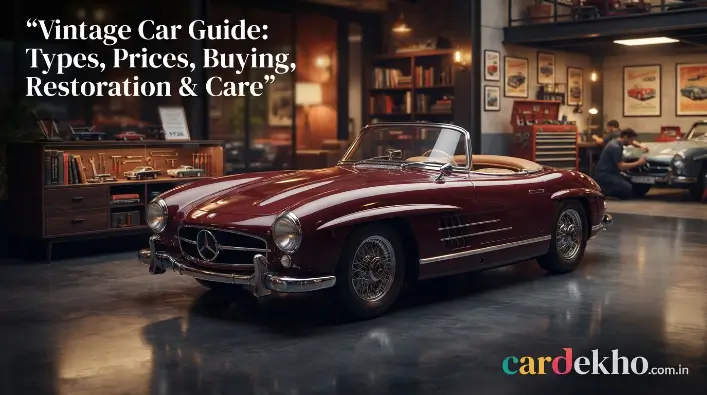
Welcome to CarDekho. A vintage car is more than an old automobile. It represents a specific period in automotive history when manufacturers were developing new engineering techniques, distinctive body styles, and innovative production methods. For collectors and enthusiasts, these vehicles offer historical character, craftsmanship, and an ownership experience that modern cars rarely provide. The term vintage car is commonly associated with automobiles manufactured between 1919 and 1930. This period followed the First World War and represented an important stage in the development of the automobile industry.
Buying a vintage car, however, requires more than an appreciation for its appearance. Age, originality, mechanical condition, restoration quality, documentation, rarity, and parts availability can all affect its value and ownership costs. This guide explains what qualifies as a vintage automobile, what makes one valuable, how to buy and restore one, and how to maintain it properly. During these years, cars became increasingly practical and mechanically sophisticated. Manufacturers introduced improvements in engines, braking systems, body construction, electrical equipment, and mass production.
What Is a Vintage Car?
The term vintage car is commonly associated with automobiles manufactured between 1919 and 1930. This period followed the First World War and represented an important stage in the development of the automobile industry. During these years, cars became increasingly practical and mechanically sophisticated. Manufacturers introduced improvements in engines, braking systems, body construction, electrical equipment, and mass production. However, there is no single worldwide definition used by every organization. Some clubs, insurers, governments, and collectors use different age ranges when classifying older automobiles. As a result, a car described as “vintage” in one market may be classified differently elsewhere.
The Common Definition of a Vintage Car
In the traditional automotive sense, the vintage period generally covers 1919 through 1930. During these years, cars became increasingly practical and mechanically sophisticated. Manufacturers introduced improvements in engines, braking systems, body construction, electrical equipment, and mass production.
These vehicles are often recognizable by:
- Large, upright body designs
- Separate headlights and fenders
- Tall radiator grilles
- Wooden or steel body construction
- Large steering wheels
- Simple dashboards
- Mechanical controls
- Relatively basic safety equipment
Many vintage automobiles also require a very different driving technique from modern cars. Steering can be heavier, brakes can be less powerful, and visibility may be limited compared with today’s vehicles.
Why Vintage, Classic, and Antique Are Different
The terms veteran, vintage, antique, and classic are often used interchangeably, but they can describe different periods or categories. During these years, cars became increasingly practical and mechanically sophisticated. Manufacturers introduced improvements in engines, braking systems, body construction, electrical equipment, and mass production. Many vintage automobiles also require a very different driving technique from modern cars. Steering can be heavier, brakes can be less powerful, and visibility may be limited compared with today’s vehicles.
| Category | Common meaning | Typical characteristic |
| Veteran | Very early automobiles, generally before 1919 | Early automotive engineering |
| Vintage | Commonly 1919–1930 | Interwar-era automobiles |
| Classic | Varies by organization and market | Older, collectible or historically significant cars |
| Antique | Varies by country | Very old vehicles, often collectible |
The important point is that these classifications are not always universal. If you are buying, selling, insuring, or registering an older vehicle, check the definition used by the relevant organization or authority.
What Makes a Vintage Car Valuable?
Age alone does not determine the value of a vintage car. Two vehicles manufactured in the same year can have dramatically different values. Many vintage automobiles also require a very different driving technique from modern cars. Steering can be heavier, brakes can be less powerful, and visibility may be limited compared with today’s vehicles.
Collectors generally consider the vehicle’s rarity, condition, originality, history, mechanical quality, and market demand. The important point is that these classifications are not always universal. If you are buying, selling, insuring, or registering an older vehicle, check the definition used by the relevant organization or authority.
Rarity and Production Numbers
A vehicle produced in small numbers can be particularly attractive to collectors. Limited production, unusual body styles, rare factory options, or a short production run can increase interest. The important point is that these classifications are not always universal. If you are buying, selling, insuring, or registering an older vehicle, check the definition used by the relevant organization or authority.
However, rarity should not automatically be treated as proof of high value. A rare vehicle in poor condition, missing documentation, or difficult-to-source components may be less desirable than a more common model in exceptional condition. A professionally restored vehicle can be valuable, but unnecessary modifications may reduce its appeal to collectors who prioritize authenticity.
Originality and Authenticity
Originality is one of the most important considerations when evaluating an old automobile. A professionally restored vehicle can be valuable, but unnecessary modifications may reduce its appeal to collectors who prioritize authenticity. The terms veteran, vintage, antique, and classic are often used interchangeably, but they can describe different periods or categories. During these years, cars became increasingly practical and mechanically sophisticated. Manufacturers introduced improvements in engines, braking systems, body construction, electrical equipment, and mass production.
Collectors may examine:
- Original engine
- Original transmission
- Factory bodywork
- Original interior
- Period-correct components
- Original wheels
- Correct instruments
- Matching identification numbers
- Historical documentation
A professionally restored vehicle can be valuable, but unnecessary modifications may reduce its appeal to collectors who prioritize authenticity.
Condition and Restoration Quality
Condition can have a major effect on value. The terms veteran, vintage, antique, and classic are often used interchangeably, but they can describe different periods or categories. During these years, cars became increasingly practical and mechanically sophisticated. Manufacturers introduced improvements in engines, braking systems, body construction, electrical equipment, and mass production.
A vintage vehicle may be:
- Preserved in original condition
- Partially restored
- Fully restored
- Poorly restored
- Modified
- In need of complete restoration
A high-quality restoration should not simply make a vehicle look attractive. The mechanical systems, bodywork, electrical components, interior, and structural elements should also be addressed appropriately.
History and Provenance
A documented history can make an ordinary-looking vehicle much more interesting to collectors. The terms veteran, vintage, antique, and classic are often used interchangeably, but they can describe different periods or categories. During these years, cars became increasingly practical and mechanically sophisticated. Manufacturers introduced improvements in engines, braking systems, body construction, electrical equipment, and mass production.
Useful records may include:
- Previous ownership records
- Restoration invoices
- Factory documentation
- Old photographs
- Service records
- Registration documents
- Competition history
- Original sales paperwork
A well-documented vehicle gives a buyer greater confidence about what they are purchasing.
Read Also: How to Change Car Tire: Easy Step-by-Step Guide for Beginners
Popular Vintage Car Models

The vintage era produced many historically important automobiles. The terms veteran, vintage, antique, and classic are often used interchangeably, but they can describe different periods or categories. During these years, cars became increasingly practical and mechanically sophisticated. Manufacturers introduced improvements in engines, braking systems, body construction, electrical equipment, and mass production. Some became particularly recognizable because of their engineering, production history, luxury, or cultural significance.
Ford Model T
The Ford Model T is one of the most influential automobiles in history. Although production began before the traditional vintage period, later examples are relevant when discussing the transition into the mass-market automobile era. Its importance comes largely from manufacturing innovation and affordability. It helped make automobile ownership accessible to a much wider population.
For collectors, well-preserved examples provide an opportunity to experience an important chapter in automotive history. The terms veteran, vintage, antique, and classic are often used interchangeably, but they can describe different periods or categories. During these years, cars became increasingly practical and mechanically sophisticated. Manufacturers introduced improvements in engines, braking systems, body construction, electrical equipment, and mass production.
Bentley Vintage Models
Bentley automobiles from the vintage period are strongly associated with luxury and motorsport. The brand’s early competition successes contributed significantly to its reputation. Vintage Bentleys are now particularly attractive to collectors interested in engineering, performance, craftsmanship, and racing history.
The terms veteran, vintage, antique, and classic are often used interchangeably, but they can describe different periods or categories. During these years, cars became increasingly practical and mechanically sophisticated. Manufacturers introduced improvements in engines, braking systems, body construction, electrical equipment, and mass production.
Rolls-Royce Vintage Cars
Rolls-Royce became synonymous with luxury engineering during the early twentieth century. The terms veteran, vintage, antique, and classic are often used interchangeably, but they can describe different periods or categories. During these years, cars became increasingly practical and mechanically sophisticated. Manufacturers introduced improvements in engines, braking systems, body construction, electrical equipment, and mass production.
Vintage Rolls-Royce automobiles are known for their large proportions, elaborate craftsmanship, and mechanical engineering. Their size and complexity can make restoration expensive, but exceptionally preserved examples can have considerable collector appeal. Collectors should research the specific manufacturer requirements for the model rather than assuming all European vintage vehicles have similar ownership requiremen
Classic European Vintage Cars
European manufacturers produced many distinctive automobiles during the vintage period. British, French, Italian, and German manufacturers developed different approaches to body design, engineering, and luxury. European vintage cars can therefore vary significantly in appearance and mechanical design.
Collectors should research the specific manufacturer and model rather than assuming all European vintage vehicles have similar ownership requirements. Collectors should research the specific manufacturer and model rather than assuming all European vintage vehicles have similar ownership requiremen
American Vintage Cars
American manufacturers played a major role in the growth of automobile production. Collectors should research the specific manufacturer and model rather than assuming all European vintage vehicles have similar ownership requirements. Collectors should research the specific manufacturer and model rather than assuming all European vintage vehicles have similar ownership requiremen
Many American vehicles from this era feature:
- Large engines
- Spacious bodies
- Simple mechanical layouts
- Distinctive radiator designs
- Large fenders
- Period-specific styling
Their availability of replacement components can vary greatly depending on the make and model.
How Much Does a Vintage Car Cost?
There is no single price for a vintage car. Values can range from relatively affordable project vehicles to extremely expensive collector automobiles. Collectors should research the specific manufacturer and model rather than assuming all European vintage vehicles have similar ownership requirements. Collectors should research the specific manufacturer and model rather than assuming all European vintage vehicles have similar ownership requiremen The price of an individual vehicle depends on its make, model, condition, rarity, originality, history, restoration quality, and location.
Factors That Affect Vintage Car Prices
Collectors should research the specific manufacturer and model rather than assuming all European vintage vehicles have similar ownership requirements. Collectors should research the specific manufacturer and model rather than assuming all European vintage vehicles have similar ownership requirements. The most important factors include:
Make and model: Some manufacturers and models have stronger collector demand.
Year: Certain production years may have greater historical significance or desirable specifications.
Condition: A structurally sound and mechanically complete vehicle is generally more desirable than a severely deteriorated project.
Originality: Original components and factory specifications can matter greatly to collectors.
Restoration quality: Professional, documented restoration work can increase desirability.
Rarity: Limited-production vehicles can attract strong collector interest.
Documentation: Clear ownership and service history can increase buyer confidence.
Provenance: Important previous owners or documented historical events can make a vehicle more desirable.
Market demand: Collector preferences change over time, affecting prices.
Frequently Asked Questions About Vintage Cars
What is considered a vintage car?
The term traditionally refers to automobiles manufactured between 1919 and 1930. However, definitions vary among automotive organizations, insurers, collectors, and countries. Always check the classification used in your specific market.
What is the difference between a vintage and classic car?
Vintage generally refers to a particular historical period, commonly 1919–1930. Classic is a broader term that can describe older, collectible, desirable, or historically significant vehicles. There is no universal definition of “classic car.”
Are vintage cars expensive to maintain?
They can be. Maintenance costs depend on the vehicle’s condition, mechanical complexity, parts availability, and access to qualified specialists. A well-maintained example can be easier to own than a neglected vehicle requiring extensive restoration.
Are vintage cars a good investment?
Some vintage automobiles become highly desirable and increase in value, but appreciation is never guaranteed. Rarity, condition, originality, provenance, and market demand can influence future value. A buyer should not assume every old car will become a profitable investment.
What should I check before buying a vintage car?
Inspect the body and chassis for rust, examine the engine and mechanical systems, verify identification numbers and documents, research the vehicle’s history, assess originality and restoration quality, and obtain an independent professional inspection before purchasing.
Conclusion
Choosing the right vintage car requires more than finding an attractive old automobile. The best choice depends on condition, authenticity, historical importance, parts availability, documentation, restoration quality, and your intended use. Inspect the body and chassis for rust, examine the engine and mechanical systems, verify identification numbers and documents, research the vehicle’s history, assess originality and restoration quality, and obtain an independent professional inspection before purchasing.
Take time to research the specific model, inspect the vehicle carefully, and calculate the complete cost of ownership before making a decision. Whether you are interested in preservation, restoration, collecting, or simply experiencing early automotive history, a carefully selected vintage car can offer an ownership experience unlike almost any modern vehicle. Rarity, condition, originality, provenance, and market demand can influence future value. A buyer should not assume every old car will become a profitable investment.
