

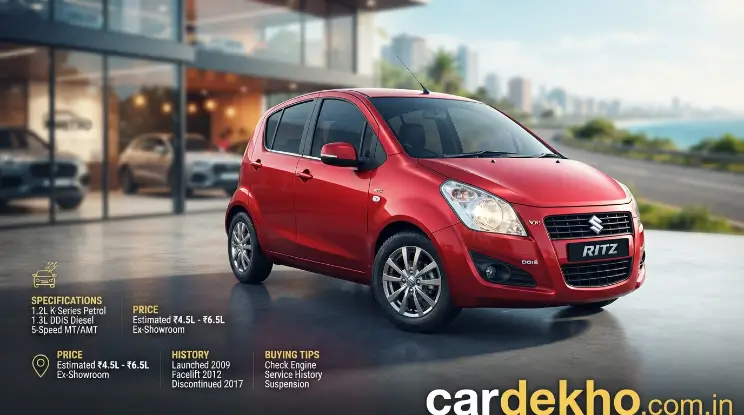
Welcome to CarDekho. The Maruti Suzuki Ritz Car is one of the most recognizable hatchbacks to come out of Maruti’s lineup in the last two decades. Built on the same platform as the Swift, the Ritz carved out its own identity with a distinctive “tall-boy” design, spacious cabin, and efficient engines that made it a favorite among city drivers.
Even though production has ended, the Ritz car still holds strong appeal in the used car market. This guide covers everything you need to know from its history and specifications to whether buying a second-hand Ritz today is a smart decision.
What Is the Maruti Suzuki Ritz Car?
The Maruti Suzuki Ritz is a premium hatchback that was launched in India in May 2009. It was positioned between the entry-level A-Star and the sportier Swift, aiming to attract small families who wanted more space without stepping into a larger segment.
Built on the proven Swift platform, the Ritz shared many mechanical components with its sibling but stood apart with its taller stance, upright design, and a roomier cabin. It quickly became known as a practical, comfortable, and fuel-efficient city car.
Maruti Suzuki Ritz History and Launch Timeline
The Maruti Suzuki Ritz Car has a journey that reflects the changing tastes of Indian car buyers, from its ambitious debut to its eventual exit from the market. Understanding this timeline helps explain both its early popularity and the reasons behind its discontinuation.
Launch in 2009: India’s 12th Compact Maruti Model
Maruti Suzuki introduced the Ritz in May 2009 as its 12th compact model in India, marking it as the company’s fifth global model developed under the Suzuki umbrella. The launch was significant because the Ritz became India’s first car to comply with Bharat Stage-IV emission norms, positioning Maruti ahead of regulatory curves at the time.
The car was based on Suzuki’s European hatchback “Splash,” but Maruti localized production heavily, with over 85 percent of components sourced domestically. This high level of local manufacturing helped keep the Ritz competitively priced while maintaining the design language and engineering standards of its European counterpart.
2012 Facelift
In late 2012, Maruti rolled out a mild facelift for the Ritz to keep it visually fresh in an increasingly competitive segment. The update focused primarily on cosmetic changes a revised front grille and updated headlamp design gave the car a slightly more contemporary look.
Inside the cabin, minor refinements were made to trim and finish, but Maruti did not alter the core mechanicals or platform. This meant the engine options, suspension setup, and overall driving experience remained consistent with the original 2009 model, even after the refresh.
Discontinuation and Replacement by Ignis
By the mid-2010s, demand for the Ritz car had declined sharply, with monthly sales figures dropping to a fraction of their earlier numbers. This slowdown reflected a broader shift in buyer preference toward crossover-styled hatchbacks with more modern design cues and updated technology.
Maruti eventually discontinued the Ritz and introduced the Maruti Ignis as its successor. The Ignis retained the tall-boy concept that made the Ritz popular but paired it with sharper styling, updated features, and better alignment with what buyers wanted from a compact city car by that point in the market’s evolution.
Maruti Suzuki Ritz Specifications
The Maruti Suzuki Ritz Car was engineered to balance performance, efficiency, and practicality, making it a well-rounded choice for Indian roads. From its engine choices to its cabin-friendly dimensions, every aspect was tuned for reliable city and highway driving.
Engine Options (K12M Petrol / DDiS Diesel)
The Ritz offered buyers two distinct engine choices depending on their driving needs and fuel preference:
- Petrol: A 1.2-litre K12M engine producing around 85 bhp, known for being refined and smooth in city driving conditions.
- Diesel: A 1.3-litre DDiS engine, the same unit that powered the Swift Diesel, delivering around 75 bhp with strong low-end torque.
Both engines were paired with a 5-speed manual gearbox, giving drivers a responsive and predictable driving experience. The DDiS diesel, in particular, earned a reputation for its low-end pull, making it well-suited for stop-and-go traffic as well as longer drives.
Mileage and Fuel Efficiency
The Ritz car was marketed as one of the most fuel-efficient options in its segment at the time of launch. ARAI-rated figures placed the petrol variant close to 17.8 kmpl, a strong number for a car in this class.
The diesel variant performed even better on efficiency, with ARAI-rated mileage slightly higher than the petrol version. This made the Ritz an attractive option for buyers who prioritized running costs alongside cabin space and comfort.
Dimensions and Ground Clearance
The Ritz measured approximately 3.7 metres in length, making it shorter than the Swift despite sharing the same platform. Its compact footprint made it easy to maneuver in tight city traffic and parking spaces.
Despite the shorter length, the Ritz featured a higher roofline that maximized interior space and boosted ground clearance, a practical advantage on uneven Indian roads. This combination of a small footprint with generous headroom was one of the car’s key selling points.
| Specification | Petrol (K12M) | Diesel (DDiS) |
| Engine Capacity | 1197cc | 1248cc |
| Power | ~85 bhp | ~75 bhp |
| Mileage (ARAI) | ~17.8 kmpl | ~19-20 kmpl |
| Transmission | 5-speed manual | 5-speed manual |
Image placement: engine bay or interior dashboard. Alt text: “Maruti Ritz engine and interior dashboard”
Read also: EON Car: Malaysia’s Largest Multi-Brand Dealership Explained
Ritz Variants Explained (LXi, VXi, ZXi, LDi, VDi)
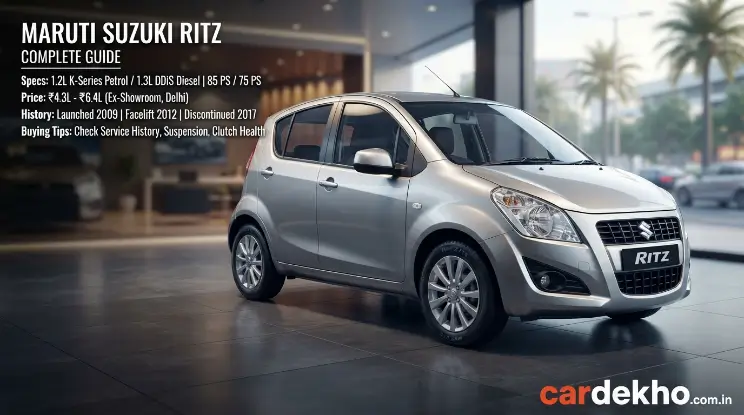
The Maruti Suzuki Ritz Car was offered across multiple variants to suit different budgets and feature preferences, giving buyers the flexibility to choose based on both fuel type and equipment level.
Petrol Variants
The petrol lineup included LXi, VXi, and ZXi trims, structured to move buyers from a basic feature set toward more premium equipment. The base LXi covered essential functionality, while the VXi added everyday convenience features.
The top-spec ZXi stood as the most well-equipped petrol variant, offering power windows, central locking, and an upgraded audio system, making it the preferred choice for buyers who wanted a more comfortable and connected driving experience.
Diesel Variants
Diesel buyers could choose between LDi and VDi, both powered by the same fuel-efficient DDiS engine but differing in comfort and convenience features. The LDi offered a no-frills package for cost-conscious buyers, while the VDi added a step up in equipment similar to its petrol counterpart.
Unlike the petrol range, the diesel lineup did not include a ZXi-equivalent top variant, keeping the diesel options more focused on efficiency and value rather than premium features.
| Variant | Fuel Type | Key Features |
| LXi / LDi | Petrol / Diesel | Basic trim, essential features |
| VXi / VDi | Petrol / Diesel | Power windows, central locking |
| ZXi | Petrol only | Top-spec, best equipped |
Design and Interior Features
The Maruti Suzuki Ritz Car combined distinctive exterior styling with a thoughtfully designed cabin, making it a car that stood out both visually and functionally within its segment.
Exterior Styling (“Tall-Boy” Design)
The Ritz car stood out with its tall-boy silhouette, steeply raked windscreen, and boomerang-shaped tail-lights, giving it a distinct identity compared to other hatchbacks of its time. This design wasn’t just about looks; it directly contributed to a roomier cabin.
The upright stance and taller roofline also improved practicality, translating into better headroom and easier entry and exit for passengers, without adding significant bulk to the car’s overall footprint.
Cabin, Space, and Comfort
Inside, the Ritz featured a dual-tone interior, blending blue and black tones that made the cabin feel airier compared to the Swift’s darker theme. This styling choice gave the interior a more open and welcoming feel, especially during daytime drives.
Seating for five was comfortable for city commutes, and the higher seating position gave better visibility on the road. Combined with the airy cabin design, this made the Ritz a practical choice for daily driving and short family trips alike.
Maruti Suzuki Ritz Price (New vs Used/Resale)
Pricing for the Maruti Suzuki Ritz has evolved significantly since its 2009 launch, reflecting both its original market positioning and its current status as a discontinued model in the used car space.
Original Ex-Showroom Price Range
At launch, the Ritz car was priced between roughly Rs 3.9 lakh and Rs 5 lakh (ex-showroom Delhi), depending on the variant and fuel type chosen. This pricing placed it competitively between the entry-level A-Star and the more established Swift.
By the time production ended, prices had risen to around Rs 4.3 lakh to Rs 6.6 lakh across the range, reflecting gradual cost increases and added features introduced during its lifecycle, including the 2012 facelift update.
Current Used Ritz Resale Value
Since the model has been discontinued for several years, used Ritz prices now depend heavily on the car’s age, mileage, and condition rather than a fixed market rate. Buyers should expect noticeable variation based on these factors when evaluating listings.
Well-maintained units typically sell at a significant discount to their original price, making the Ritz an affordable option in the used hatchback market for buyers prioritizing value and space over having the latest features.
Ritz vs Swift: What’s the Difference?
| Factor | Maruti Ritz | Maruti Swift |
| Design | Tall-boy, upright | Sporty, low stance |
| Interior Space | More headroom | Slightly less headroom |
| Mileage | Comparable | Comparable |
| Market Availability | Discontinued | Still in production |
| Resale Value | Lower demand | Higher demand |
While mechanically similar, the Swift has remained in continuous production and enjoys stronger resale value and easier access to spare parts compared to the Ritz.
Why Was the Maruti Ritz Discontinued?
The primary reason behind the Ritz’s exit was a steady decline in sales. As buyer preferences shifted toward crossover-styled hatchbacks and SUVs, the Ritz’s design and feature set began to feel dated. Maruti chose to replace it with the Ignis, which offered a more modern take on the same tall-boy concept with updated technology and styling.
Image placement: comparison shot Ritz vs Ignis Alt text: “Maruti Ritz compared with Maruti Ignis replacement model”
Should You Buy a Used Maruti Ritz Today?
Buying a used Maruti Ritz can be a smart move for budget-conscious buyers, but it comes with trade-offs worth weighing carefully before making a decision, especially given its discontinued status.
Pros of Buying a Second-Hand Ritz
- Spacious cabin for its size
- Reliable and fuel-efficient engines
- Lower purchase price compared to newer hatchbacks
- Easy to maintain due to shared parts with the Swift
Cons and What to Watch Out For
- Discontinued model means fewer dealership-level services
- Older units may need more frequent maintenance
- Limited resale value compared to currently produced models
Inspection Checklist Before Buying
Before finalizing a used Ritz purchase, a thorough inspection can save buyers from costly surprises down the line:
- Check engine condition and service history
- Inspect for rust, especially in the wheel arches and underbody
- Test the suspension and steering response
- Verify all electrical components (power windows, AC, audio)
- Confirm ownership documents and RC transfer details
Common Mistakes Buyers Make With Used Ritz Cars
Many buyers overlook the service history of a used Ritz, assuming that a clean exterior means a well-maintained engine. Others skip a proper mechanical inspection altogether, which can lead to missing early signs of wear or hidden issues.
A common oversight is also failing to check whether spare parts are still easily available in their region before buying. To avoid these costly errors, always get a trusted mechanic to inspect the car before finalizing a purchase.
Alternatives to Consider (Maruti Ignis, Swift, Baleno)
If you’re exploring options beyond the Ritz, consider:
- Maruti Ignis: The direct successor, with modern styling and better tech
- Maruti Swift: Sportier design, wider parts availability, strong resale value
- Maruti Baleno: A premium hatchback with more space and features
Frequently Asked Questions
Is the Maruti Suzuki Ritz considered a safe car?
The Ritz offered standard safety features for its era, including seatbelts and optional airbags on higher variants, but it lacks the advanced safety tech found in modern hatchbacks.
Can I still get genuine spare parts for the Ritz?
Yes, since the Ritz shares many components with the Swift, most genuine parts remain available through Maruti Suzuki service centers, though certain model-specific parts may take longer to source.
How does the Ritz compare to the Maruti Ignis in terms of value?
The Ignis offers modern styling and better features, but a used Ritz is generally more affordable upfront, making it appealing for buyers prioritizing budget over the latest tech.
Was the Maruti Ritz available with automatic transmission?
No, the Ritz was only offered with a 5-speed manual gearbox across all its petrol and diesel variants throughout its production run.
What is the average lifespan of a well-maintained Ritz engine?
With regular servicing and proper care, both the K12M petrol and DDiS diesel engines can comfortably run beyond 150,000 to 200,000 kilometers without major issues.
Conclusion
The Maruti Suzuki Ritz Car may no longer be in production, but it still stands as a well-built, practical hatchback worth considering in the used car market. Its spacious cabin, fuel-efficient engines, and shared Swift platform make it a dependable choice for buyers on a budget. The tall-boy design wasn’t just a styling choice; it genuinely improved comfort and visibility, something many buyers still appreciate today.
If you’re thinking about buying a used Ritz, do your homework first. Check the service history, get a trusted mechanic to inspect it, and confirm spare parts availability in your area. A little caution goes a long way. With the right unit and proper care, the Ritz car can still deliver years of reliable, comfortable driving.
