


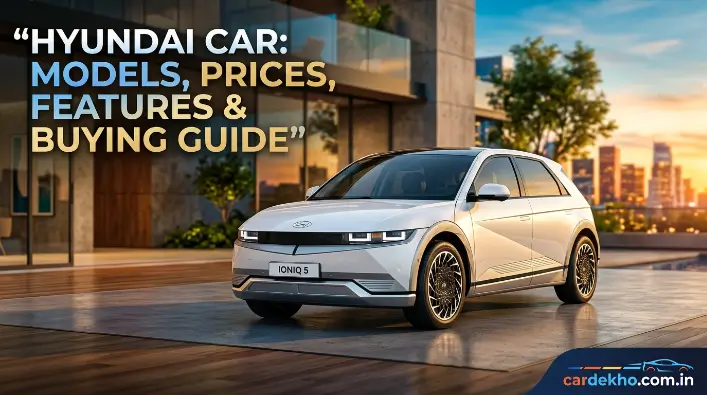
Welcome to CarDekho. A Hyundai car is a popular choice for drivers who want a good combination of modern design, comfortable interiors, useful technology, safety features, and practical performance. Hyundai offers different types of vehicles, including sedans, SUVs, hatchbacks, and electric models, giving buyers multiple options based on their budget, lifestyle, and driving needs. These vehicles are designed to provide comfort and convenience for both everyday city driving and longer journeys.
Choosing the right Hyundai car involves more than simply looking at its price. Buyers should consider the model, variant, engine performance, fuel economy, safety features, technology, maintenance costs, and expected resale value before making a decision. Understanding these factors makes it easier to compare different Hyundai models and select a vehicle that offers the right balance of features, performance, and overall value.
What Is a Hyundai Car?
A Hyundai car is one of the different vehicle categories Hyundai offers, which is why these vehicles are popular among different types of buyers. Hyundai is a major automobile manufacturer known for producing vehicles that combine modern design, comfortable interiors, technology, safety, and practical performance. Depending on the market, Hyundai offers petrol, hybrid, and electric vehicles in different sizes and body styles. Smaller cars can be suitable for city driving, while sedans provide a balance of comfort and practicality, and SUVs offer additional passenger and cargo space. Understanding these differences helps buyers choose a vehicle according to their budget, lifestyle, driving habits, and everyday requirements.
Hyundai Car Types
Hyundai’s vehicle range can generally be divided into several categories, with each type designed for different driving needs. Hatchbacks are compact and practical for city driving, while sedans offer comfortable interiors and useful luggage space for daily commuting and longer journeys. SUVs provide more cabin and cargo space along with a higher seating position, making them a practical choice for families. Electric cars use electric powertrains and can appeal to buyers looking for modern and more efficient mobility options.
The availability of Hyundai models and powertrains varies by country and market, so buyers should always check the latest officially available options in their region. When choosing a Hyundai car, it is important to consider factors such as passenger capacity, driving environment, storage requirements, fuel or charging needs, and overall budget rather than selecting a vehicle based only on its appearance.
Why Hyundai Cars Are Popular
Hyundai cars are popular because they bring together several features that buyers commonly look for in a modern vehicle. Contemporary exterior designs give the vehicles a distinctive appearance, while comfortable interiors and technology features improve the everyday driving experience. Depending on the model and variant, buyers may find infotainment systems, digital displays, smartphone connectivity, parking assistance, climate-control features, and other convenience technologies. Hyundai also offers vehicles across different segments, giving buyers more flexibility when selecting a car according to their budget and requirements.
Safety is another important factor behind the popularity of Hyundai vehicles. Depending on the specific model and variant, features can include airbags, anti-lock braking systems, stability control, parking sensors, cameras, and advanced driver-assistance technologies. Buyers should compare the exact specifications of different variants because equipment can vary significantly. Fuel efficiency is also an important consideration, although actual mileage depends on the engine, powertrain, traffic, road conditions, vehicle load, and driving style.
- Modern design: Contemporary exterior styling with practical interior layouts.
- Technology: Infotainment, connectivity, digital displays, and convenience features.
- Comfort: Comfortable seating, useful storage, and practical cabin space.
- Safety: Safety and driver-assistance features vary by model and variant.
- Fuel efficiency: Economy depends on the engine, powertrain, and driving conditions.
- Different price ranges: Multiple vehicle segments provide options for different budgets.
Read Also: Ciaz Car: Price, Specs, Mileage & Features in 2026
Hyundai Car Models and Prices in Pakistan

This section explains the main Hyundai car models that buyers may find in Pakistan and the key factors that determine their prices. Hyundai offers vehicles in different categories, allowing buyers to choose according to their budget, family size, driving requirements, and preferred body style. The price of a vehicle can depend on its model, variant, engine, transmission, features, taxes, registration costs, market conditions, and availability. Since prices and available variants can change, buyers should check the latest information from an official Hyundai source or a reliable automotive marketplace before purchasing.
Popular Hyundai Car Models
Several Hyundai models are commonly considered by buyers in the Pakistan market, including the Hyundai H-100, Hyundai Elantra, Hyundai Sonata, Hyundai Tucson, Hyundai Santa Fe, and Hyundai Palisade. Each model is designed for a different purpose. The Hyundai H-100 is a practical commercial vehicle suitable for business and transportation needs, while the Hyundai Elantra is a sedan focused on comfortable passenger travel, modern styling, and everyday practicality. The Hyundai Sonata offers a more premium sedan experience with an emphasis on comfort, technology, and road presence.
For SUV buyers, the Hyundai Tucson offers a balance of cabin space, comfort, modern features, and everyday usability. The Hyundai Santa Fe is a larger SUV suited to families looking for additional passenger and cargo space, while the Hyundai Palisade is positioned as a larger and more premium SUV. Model availability and specifications can vary over time, so buyers should confirm the latest information before choosing a Hyundai car.
Hyundai Car Price Factors
The price of a Hyundai car is affected by several factors, so buyers should not judge a vehicle only by its starting price. Different variants of the same model can have different prices because of changes in engine options, transmission, safety equipment, technology, interior features, and other specifications. A higher variant may cost more but can provide additional features that make it better suited to a buyer’s requirements.
Other factors that can influence the final price include taxes, import duties where applicable, registration charges, dealership pricing, market demand, and vehicle availability. For used Hyundai cars, mileage, model year, condition, service history, accident history, and resale demand can also make a major difference. Buyers should therefore compare the overall purchase and ownership cost, including fuel, maintenance, insurance, and potential resale value, instead of focusing only on the advertised price.
Hyundai Car Features, Performance and Fuel Economy
Main features, performance factors, and fuel economy considerations that buyers should evaluate before choosing a Hyundai car. These factors directly affect comfort, driving experience, running costs, and overall value, so looking only at the vehicle’s price is not enough. Different Hyundai models are designed for different purposes, meaning a car used mainly for city commuting may need good fuel economy and easy handling, while an SUV used for family trips may require more space, stronger performance, and greater practicality. Reviewing the complete specifications helps buyers understand the engine, transmission, technology, safety equipment, and efficiency of the vehicle they are considering.
Engine and Transmission
The engine and transmission have a major effect on the performance, fuel consumption, and driving experience of a Hyundai car. Depending on the model and market, Hyundai vehicles may use petrol, hybrid, or electric powertrains. Buyers should consider engine power, torque, vehicle size, and intended use when comparing models. A smaller engine may be suitable for regular city driving, while a more powerful powertrain can be useful for highway travel, carrying passengers, or driving in demanding conditions.
Transmission options can also differ between models and variants. Manual transmissions can provide more direct control, while automatic transmissions are often convenient for drivers who regularly deal with traffic. When comparing vehicles, buyers should look beyond engine capacity and also consider power output, torque, transmission type, vehicle weight, fuel economy, driving conditions, and maintenance requirements. These factors provide a more realistic understanding of how the car may perform in everyday use.
Interior and Technology
The interior of a modern Hyundai car is designed to provide a combination of comfort, convenience, practicality, and technology. Depending on the model and variant, buyers may find touchscreen infotainment systems, digital instrument displays, smartphone connectivity, climate-control functions, comfortable seating, charging options, and other useful features. These technologies can make everyday driving more convenient and improve the overall cabin experience for both the driver and passengers.
Higher variants may offer additional technology, premium materials, improved comfort features, and larger or more advanced displays. However, buyers should compare the exact specifications of each variant because features can differ between trims. Interior practicality should also be considered by checking rear-seat space, legroom, headroom, boot or cargo capacity, storage areas, driving position, and visibility. A vehicle with impressive technology may not be the best choice if it does not provide enough space or comfort for your regular needs.
Safety and Driving Features
Safety is one of the most important factors to consider when selecting a Hyundai car. Depending on the model and variant, safety equipment may include airbags, anti-lock braking systems, electronic stability systems, parking sensors, cameras, and other protective technologies. These features can help improve vehicle control and provide additional protection for occupants. Since safety equipment can vary between variants, buyers should check the exact specifications rather than assuming that every Hyundai model includes the same features.
Selected Hyundai models and higher variants may also include advanced driver-assistance technologies such as automatic emergency braking, lane-related assistance, blind-spot monitoring, and adaptive cruise control. These systems are designed to support the driver and improve awareness in different driving situations, but their availability depends on the specific model, trim, and market. Comparing safety features between variants is therefore an important step before purchasing a Hyundai car.
How to Choose the Right Hyundai Car
This section explains the important factors to consider when choosing the right Hyundai car for your needs. The best choice depends on your budget, daily driving habits, family requirements, preferred features, fuel economy, and long-term ownership plans. Since every driver has different priorities, there is no single Hyundai model that works perfectly for everyone. A smart buying decision starts by understanding your actual requirements and then comparing suitable models based on price, performance, comfort, practicality, maintenance costs, and expected resale value.
Choose by Budget and Usage
The first step is to decide how much you can comfortably spend on a Hyundai car. Your budget should cover more than the vehicle’s purchase price because registration, insurance, fuel, maintenance, tyres, and unexpected repairs can add to the overall ownership cost. Comparing different variants is also useful because a slightly more expensive version may offer important safety, comfort, or technology features that provide better value for your needs. Setting a realistic budget before visiting a dealership can also prevent you from choosing a vehicle that becomes difficult to afford later.
Your regular usage should also influence the type of vehicle you select. A sedan may work well for daily commuting and small families, while an SUV can be more suitable for buyers who need additional passenger and cargo space. Business users may prefer a practical commercial vehicle, whereas people who frequently travel long distances should consider comfort, fuel economy, highway performance, luggage capacity, and driving stability. Choosing a Hyundai car based on your actual usage can make everyday driving more convenient and help control long-term expenses.
Compare Fuel Economy and Ownership Costs
Fuel economy is an important consideration because fuel can represent a significant recurring expense during the ownership of a Hyundai car. However, advertised fuel averages may differ from actual results because traffic, driving style, road conditions, vehicle load, air-conditioning use, tyre pressure, and maintenance can affect fuel consumption. Buyers should therefore consider realistic fuel usage based on their normal driving environment rather than depending only on the official mileage figure.
Maintenance and ownership costs should also be checked before making a final decision. Consider the availability and cost of servicing, spare parts, tyres, insurance, and routine repairs. A vehicle with a higher purchase price can sometimes provide better overall value if its fuel and maintenance expenses are manageable. Resale value is another factor to consider, especially if you plan to sell the vehicle after a few years. A well-maintained model with good market demand may be easier to resell and can help reduce the overall cost of ownership.
New vs. Used Hyundai Car
Buying a new Hyundai car offers the advantage of getting a fresh vehicle with updated features and the opportunity to select your preferred model and variant. Depending on the market and purchase terms, a new vehicle may also come with warranty coverage. New cars generally provide greater confidence about their previous use because there is no earlier ownership history to investigate, making them suitable for buyers who prefer predictable ownership and the latest available features.
A used Hyundai car can be a more affordable option and may allow buyers to purchase a larger or higher-level model within the same budget. However, the condition and history of the vehicle are extremely important. Before purchasing, check the service history, mileage, accident history, ownership documents, tyres, engine, transmission, suspension, brakes, interior, and exterior condition. A professional inspection can also identify mechanical or structural problems that may not be visible during a quick check, helping you make a more informed decision.
Common Hyundai Car Buying Mistakes and Solutions
This section explains the common mistakes buyers should avoid when purchasing a Hyundai car and provides practical solutions for making a better buying decision. Purchasing a vehicle is a major financial commitment, so focusing only on the advertised price can cause problems later. Buyers should also consider the exact variant, safety features, engine, transmission, fuel economy, maintenance expenses, vehicle condition, market demand, and resale value. Understanding these mistakes before purchasing can make it easier to compare Hyundai models and choose a vehicle that provides better value throughout its ownership.
Mistake 1: Choosing Only by Price
Choosing the cheapest Hyundai variant may appear to be the easiest way to save money, but the lowest-priced version may not include the equipment you actually need. Differences between variants can include safety systems, engine and transmission options, technology, comfort, and convenience features. A lower initial price does not always mean better value if important features are missing.
Solution: Compare at least two suitable variants and check their specifications, safety equipment, technology, comfort, and practicality. Instead of choosing only the cheapest option, select the Hyundai car variant that provides the best combination of features and value within your budget.
Mistake 2: Ignoring Ownership Costs
Many buyers focus on the purchase price and forget about the recurring expenses involved in owning a Hyundai car. Fuel, servicing, spare parts, tyres, insurance, registration, and unexpected repairs can add significantly to the overall cost over time. A vehicle that looks affordable at the time of purchase may become expensive if its running and maintenance costs are higher than expected.
Solution: Estimate the total ownership cost before buying. Include expected fuel expenses, regular servicing, insurance, tyres, repairs, and other maintenance costs in your budget. This gives you a clearer idea of whether the vehicle is affordable not only to purchase but also to maintain over the long term.
Mistake 3: Not Comparing Variants
Different Hyundai variants can have noticeable differences in safety, technology, comfort, performance, and convenience features. Assuming that all versions of the same model are similar can result in choosing a variant that does not meet your requirements. Some important features may only be available on higher trims.
Solution: Compare the exact specifications of the variants you are considering. Pay attention to the engine, transmission, safety equipment, infotainment system, interior features, and driver-assistance technologies. A side-by-side comparison can help you identify the Hyundai car variant that offers the most suitable combination of price and features.
Mistake 4: Skipping the Test Drive
A specification sheet or photographs cannot fully show how a Hyundai car feels during real-world driving. Important factors such as seating position, visibility, steering response, braking, acceleration, suspension, cabin noise, and overall comfort are easier to judge during a test drive. A vehicle may look ideal on paper but feel different when you actually drive it.
Solution: Always take a proper test drive before making your final decision. Check how comfortable the seats are, how easily you can see around the vehicle, how the steering and brakes respond, and how the car behaves on roads similar to those you normally use. This can help you determine whether the vehicle is genuinely suitable for your daily driving needs.
Mistake 5: Ignoring Market and Resale Factors
The purchase price of a vehicle does not represent its complete financial value. Market demand, availability, depreciation, service support, spare-parts availability, and resale demand can all affect the long-term value of a Hyundai car. A model with good market demand and reliable support may be easier to maintain and resell, while a less popular model may lose value more quickly.
Solution: Research the model’s market reputation, service availability, spare-parts support, depreciation, and resale demand before purchasing. If you expect to sell the vehicle after a few years, considering resale value from the beginning can help you make a more financially sensible decision.
A simple pre-purchase checklist can include the final price, exact variant, vehicle condition, service history, documents, safety features, test drive, and professional inspection. Checking these points before buying can help identify potential problems and make your Hyundai car purchase more secure and informed.
Frequently Asked Questions
Which Hyundai car is best for families?
The best Hyundai car for a family depends on the number of passengers, budget, required cabin space, and driving needs. Larger SUVs can be useful for families needing more passenger and cargo space, while sedans can provide a comfortable option for smaller families.
Are Hyundai cars fuel-efficient?
Hyundai car fuel economy varies by model, engine, transmission, road conditions, and driving style. Compact vehicles generally use less fuel than larger SUVs, while hybrid and electric powertrains can offer different efficiency advantages.
What should I check before buying a Hyundai car?
Check the exact variant, price, engine, transmission, safety equipment, service history, fuel economy, ownership costs, documents, and resale considerations. A test drive is also important before making the final decision.
Is a new or used Hyundai car better?
Both options have advantages. A new Hyundai provides a newer vehicle and the benefits associated with new-car ownership, while a used Hyundai can offer a lower purchase price. The better choice depends on your budget, the condition of the used vehicle, and your long-term plans.
Where can I check the latest Hyundai car prices?
Check official Hyundai sources and reputable automotive marketplaces for current prices and availability. Since prices can change due to taxes, market conditions, variants, and dealership policies, verify the price shortly before purchasing.
Conclusion
Choosing the right Hyundai car requires careful consideration of more than just the advertised price. Buyers should compare different models and variants while looking at engine and transmission options, fuel economy, safety features, interior technology, comfort, maintenance expenses, and expected resale value. These factors can have a significant impact on both the daily driving experience and the overall cost of ownership. Taking time to review the complete specifications can help buyers avoid choosing a vehicle that does not match their actual requirements.
Whether you are considering a sedan, SUV, commercial vehicle, or another Hyundai model, the best Hyundai car is the one that fits your budget, lifestyle, and everyday driving needs. Before making the final decision, compare available specifications, estimate fuel and maintenance costs, take a proper test drive, inspect the vehicle carefully, and verify the latest market price and availability. By considering these factors together, you can make a more confident and practical Hyundai car buying decision.
