


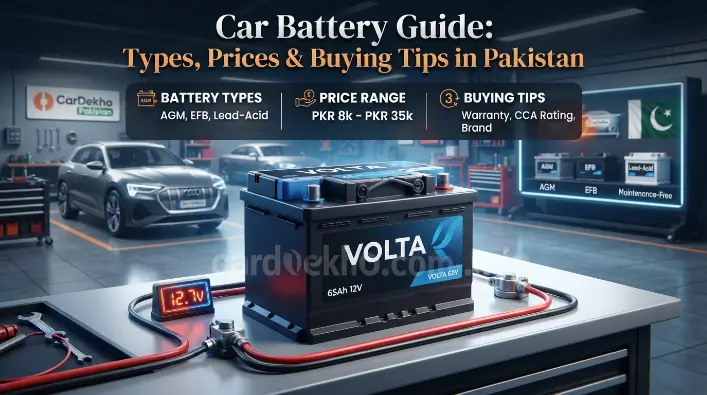
Welcome to CarDekho. A car battery is an essential part of any vehicle because it supplies the electrical power needed to start the engine and run important electrical systems. It provides power to the starter motor, headlights, dashboard, interior lights, security system, and other electronic features. When a car battery becomes weak or damaged, you may notice slow engine starting, dim lights, or other electrical problems even if the rest of the car is properly maintained.
Choosing the right car battery is important because every vehicle has specific battery requirements. Factors such as battery type, voltage, Ah capacity, physical size, warranty, and driving conditions should be considered before making a purchase. In this guide, you will learn about different car battery types, car battery price in Pakistan, common signs of battery failure, maintenance tips, and how to choose the right battery for your vehicle.
What Is a Car Battery and How Does It Work?
A car battery is an essential part of a vehicle that stores electrical energy and provides the power needed to start the engine and operate important electrical systems. When you start the car, the battery sends power to the starter motor, while also supporting lights, dashboard electronics, security features, and infotainment. Once the engine starts, the alternator supplies electricity and recharges the car battery for future use. If the battery becomes weak, you may experience slow engine starting, dim lights, or other electrical problems. Understanding voltage, Ah capacity, and CCA can help you choose the right car battery for your vehicle.
What Does a Car Battery Power?
A car battery powers several important vehicle systems, especially when the engine is not running. The starter motor uses the battery to crank the engine, while headlights, interior lights, dashboard electronics, alarm systems, infotainment, and other electrical equipment also depend on the vehicle’s electrical system. Once the engine starts, the alternator takes over much of the electrical load and restores the energy used by the battery during startup.
Repeated short trips, leaving lights or electronics switched on, and electrical faults can gradually drain a car battery. For this reason, unusual starting problems should not be ignored, particularly if the battery repeatedly loses its charge.
Battery Voltage, Ah and CCA Explained
Understanding car battery specifications is important when choosing a replacement. Most passenger vehicles use a 12-volt system, but voltage alone does not determine whether a battery is suitable. Ah (Ampere-hour) indicates the battery’s energy-storage capacity, while the correct Ah rating depends on the vehicle manufacturer’s requirements. A higher Ah rating is not automatically better, so the recommended specification should always be followed.
CCA (Cold Cranking Amps) indicates how effectively a battery can provide high starting current in cold conditions. Although Pakistan generally has a warm climate, CCA remains a useful specification when comparing starting performance. Before buying a car battery, check the recommended voltage, Ah capacity, CCA, physical size, terminal position, and battery type to ensure the replacement is compatible with your vehicle.
Types of Car Battery Available in Pakistan
Different types of car batteries are available in Pakistan, and each type is designed for different vehicle requirements and driving conditions. Conventional lead-acid batteries are commonly used because they are affordable and widely available, while maintenance-free batteries are popular because they require less routine attention. Advanced options such as AGM batteries are suitable for some modern vehicles with higher electrical demands. Choosing the right car battery depends on your vehicle’s specifications, electrical requirements, budget, and expected usage.
Lead-Acid and Conventional Batteries
Traditional lead-acid batteries are a common car battery option and use an electrolyte solution to store and deliver electrical energy. Depending on the design, they may require periodic inspection and maintenance, such as checking fluid levels and keeping the terminals clean. Their affordability and wide availability make them suitable for many older or simpler vehicles.
However, they require more attention than sealed batteries, so owners should follow the manufacturer’s maintenance instructions and avoid unnecessary handling of battery fluid. Most importantly, the battery should match the vehicle’s recommended size, capacity, and specifications.
Maintenance-Free and Sealed Batteries
Maintenance-free batteries are designed to reduce routine electrolyte maintenance and provide a convenient option for everyday drivers. Their sealed construction means owners generally do not need to perform the same fluid checks required by some conventional batteries. These car battery options are widely available in Pakistan and are used in many modern passenger vehicles.
However, maintenance-free does not mean completely maintenance-free; terminals should still be kept clean, the battery should remain securely fitted, and the charging system should be checked if problems occur. Before buying one, check the required size, Ah capacity, terminal arrangement, voltage, and vehicle compatibility.
AGM and Other Advanced Battery Types
AGM, or Absorbent Glass Mat, is a more advanced car battery technology designed for vehicles with higher electrical demands. AGM batteries can provide strong starting performance and are commonly used in some vehicles with start-stop systems and numerous electronic features. Their construction allows them to handle demanding electrical requirements, but they are generally more expensive than conventional batteries.
There is no need to choose an AGM car battery simply because it is more expensive. If your vehicle is designed for a specific battery technology, following the manufacturer’s recommendation is the best approach. Using the correct battery type, capacity, size, and specifications helps ensure reliable starting performance and proper operation of the vehicle’s electrical system.
Read Also: Suzuki Car Price In Pakistan: Models & Specs 2026
Car Battery Price in Pakistan and Popular Brands
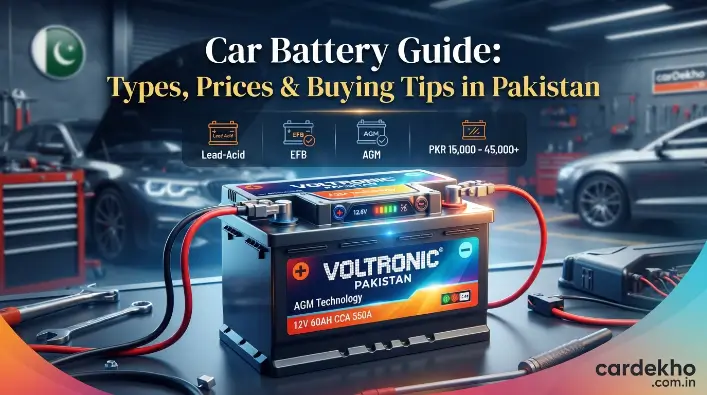
Car battery price in Pakistan depends on factors such as battery capacity, technology, brand, warranty, vehicle requirements, and current market conditions. Prices can also change because of manufacturing costs, transportation expenses, currency fluctuations, and local market demand. Popular car battery brands in Pakistan include Exide, AGS, Osaka, Phoenix, Volta, and Daewoo, but each brand offers different models and specifications. Therefore, buyers should compare the exact model, Ah capacity, warranty, and vehicle compatibility instead of choosing a car battery based only on brand or price. A battery with the correct specifications and suitable warranty can provide better value and reliable performance over time.
| Brand | Common Position | What to Check |
| Exide | Widely available | Model, Ah, warranty |
| AGS | Popular automotive option | Capacity, warranty |
| Osaka | Common market choice | Size, warranty |
| Phoenix | Automotive option | Correct model |
| Volta | Widely available | Ah and battery type |
| Daewoo | Maintenance-free options | Model and warranty |
What Affects Car Battery Price?
The price of a car battery can be affected by its capacity, technology, brand, warranty, vehicle requirements, and stock freshness. Higher-capacity or advanced-technology batteries may cost more, while established brands can have different prices depending on the model and warranty.
Larger vehicles may also require batteries with greater capacity, which can increase the overall cost. When comparing car battery prices in Pakistan, don’t focus only on finding the cheapest option; instead, check the battery’s specifications, condition, warranty, and compatibility to get better long-term value.
How to Choose the Right Battery for Your Car
To choose the right car battery, first check your vehicle owner’s manual or manufacturer’s recommended specifications. Pay attention to the battery type, voltage, Ah capacity, physical dimensions, terminal position, and starting requirements. The battery should fit securely in its mounting area and have the correct terminal arrangement.
Before purchasing, compare the specifications of your existing battery with the recommended replacement, and if you are unsure, ask a qualified battery technician to confirm the correct car battery for your vehicle.
Signs Your Car Battery Is Weak or Failing
A car battery usually shows warning signs before it completely loses its ability to start the vehicle. Drivers may notice that the engine takes longer to crank, electrical systems become weaker, or the battery needs charging more often than usual. Recognizing these symptoms early can help you inspect or replace the battery before you experience an unexpected starting problem. However, similar symptoms can also be caused by the alternator, starter motor, wiring, or another electrical component, so repeated battery problems should be properly diagnosed instead of assuming the car battery is always the cause.
Common Warning Signs
Some common signs of a weak or failing car battery include:
- Slow engine cranking: The engine turns over more slowly than normal when starting.
- Difficulty starting: The vehicle may take several attempts before the engine starts.
- Dim lights: Headlights or interior lights may appear weaker than usual.
- Battery warning light: A warning indicator may appear on the dashboard.
- Corroded terminals: Corrosion around the battery terminals can affect electrical connections.
- Repeated battery discharge: The car battery may lose its charge frequently.
- Frequent jump-starting: Needing jump-starts regularly can indicate a battery or charging-system problem.
Slow engine cranking is one of the most noticeable signs because the engine may take longer than usual to start. If this happens repeatedly, the car battery should be inspected. Corrosion around the terminals can also interfere with the electrical connection, while repeated loss of charge may indicate that the battery is weak or that another component is causing excessive electrical drain.
Battery Problem or Alternator Problem?
A weak car battery and a faulty alternator can produce similar symptoms, but they perform different jobs. The battery stores electrical energy and provides the power required for starting, while the alternator generates electrical power when the engine is running and helps recharge the battery. If the alternator is not charging properly, even a new battery may repeatedly lose its charge.
If your car battery becomes discharged again and again after charging or replacement, the problem may be related to the alternator, starter, wiring, or another part of the electrical system. A proper inspection can identify the actual cause and prevent unnecessary battery replacement. Instead of repeatedly installing a new car battery, have the complete starting and charging system checked when the problem continues.
How to Maintain a Car Battery and Extend Its Life
Proper maintenance can help a car battery perform reliably for longer and reduce common starting and electrical problems. Simple habits such as keeping the terminals clean, securing the battery properly, avoiding unnecessary electrical drain, and checking the charging system when needed can make a difference. Battery life depends on factors such as climate, driving habits, vehicle electronics, maintenance, and battery type. In Pakistan, high temperatures can place additional stress on a car battery, making regular inspection and proper care especially important.
Simple Battery Maintenance Tips
Follow these basic practices to keep your car battery in good condition:
- Keep terminals clean: Helps maintain a strong electrical connection.
- Secure the battery: Prevents movement and possible damage.
- Check battery condition: Regular inspection can reveal problems early.
- Avoid electrical drain: Turn off lights and accessories when the engine is off.
- Watch starting performance: Slow starting can indicate a weak car battery.
- Check the charging system: Repeated power loss may indicate a charging problem.
Frequent short trips may not give the car battery enough time to recover the power used during starting. For conventional batteries, follow the manufacturer’s maintenance instructions and do not handle or add battery fluid unless the battery specifically requires it.
Common Mistakes to Avoid
A common mistake is buying a car battery only because it has a low price. The battery must match the vehicle’s recommended Ah rating, size, type, and terminal arrangement. A higher Ah rating is not automatically better, and ignoring the battery’s age or warranty can also lead to poor value. Always check the complete specifications before making a purchase.
- Buying only on price: Consider quality and specifications.
- Ignoring battery age: Check the battery’s freshness before buying.
- Choosing the wrong Ah rating: Follow the manufacturer’s recommendation.
- Ignoring warranty: Choose a battery with suitable warranty coverage.
- Installing the wrong size: Ensure the car battery fits correctly.
- Assuming every dry battery is identical: Check technology and specifications.
A good car battery should offer the right combination of compatibility, condition, specifications, warranty, and value rather than simply being the cheapest option.
When Should You Replace Your Car Battery?
Knowing when to replace a car battery can help you avoid unexpected starting problems. There is no exact replacement date for every vehicle because battery life depends on climate, driving habits, maintenance, charging performance, battery quality, and electrical demand. Instead of waiting for complete failure, pay attention to the battery’s age and performance. If your vehicle starts slowly, needs frequent jump-starts, or shows unusual electrical symptoms, have the car battery tested to determine whether it still has sufficient performance.
How Long Does a Car Battery Last?
A car battery can last for several years, but its actual lifespan varies depending on temperature, driving patterns, maintenance, electrical accessories, and charging-system condition. Frequent short trips and long periods without driving can affect battery performance, while extreme temperatures can also place additional stress on the battery.
If the battery is becoming older and starts showing warning signs, it should be checked, especially before long journeys. However, age alone does not always mean replacement is necessary; the best approach is to consider both the battery’s age and its tested condition.
Car Battery Buying Checklist
Before purchasing a replacement car battery, check these important points:
- Correct battery type: Match the battery technology recommended for your vehicle.
- Correct voltage: Confirm the required voltage, commonly 12V for passenger vehicles.
- Recommended Ah: Choose the capacity specified by the manufacturer.
- Correct physical size: Ensure the battery fits securely in the mounting area.
- Terminal position: Check that the terminals are arranged correctly.
- Manufacturing date: Choose a reasonably fresh battery with proper storage history.
- Warranty: Check the warranty period and conditions.
- Reputable seller: Buy from a trustworthy battery or automotive retailer.
Following this checklist helps ensure that your car battery is compatible with your vehicle and provides reliable starting performance.
Frequently Asked Questions
How long does a car battery usually last?
A car battery can commonly provide several years of service, but its actual lifespan depends on climate, driving habits, maintenance, battery quality, and the vehicle’s charging system. Regular testing can help identify a weak battery before it fails.
Which car battery is best in Pakistan?
There is no single battery that is best for every vehicle. Brands such as Exide, AGS, Osaka, Phoenix, Volta, and Daewoo offer different models. The best choice is the battery that matches your vehicle’s required type, capacity, size, and electrical specifications while providing a suitable warranty.
What Ah battery does my car need?
The correct Ah rating depends on the vehicle. Check the owner’s manual or manufacturer’s recommendation before buying a replacement. Do not select a battery simply because it has a higher Ah rating.
What are the signs of a weak car battery?
Common signs include slow engine cranking, difficulty starting, dim lights, repeated loss of charge, battery warning indicators, corrosion around terminals, and frequent jump-starting.
Should I choose a maintenance-free battery?
A maintenance-free battery can be convenient because it requires less routine attention, but the most important factor is compatibility. If your vehicle is designed for a particular battery type and specification, follow that recommendation rather than choosing a battery solely because it is maintenance-free.
Conclusion
Choosing and maintaining the right car battery is essential for reliable starting performance and the proper operation of your vehicle’s electrical systems. A good car battery should match your vehicle’s required voltage, Ah capacity, battery type, physical size, and terminal arrangement. Regularly checking the battery, keeping the terminals clean, avoiding unnecessary electrical drain, and paying attention to warning signs such as slow starting or repeated discharge can help prevent unexpected problems.
When it is time for replacement, do not choose a car battery based only on price or brand. Consider its specifications, technology, manufacturing date, warranty, and compatibility with your vehicle. By selecting the right battery and following basic maintenance practices, you can improve reliability, avoid unnecessary replacement costs, and ensure your vehicle is ready for everyday driving and longer journeys.
