


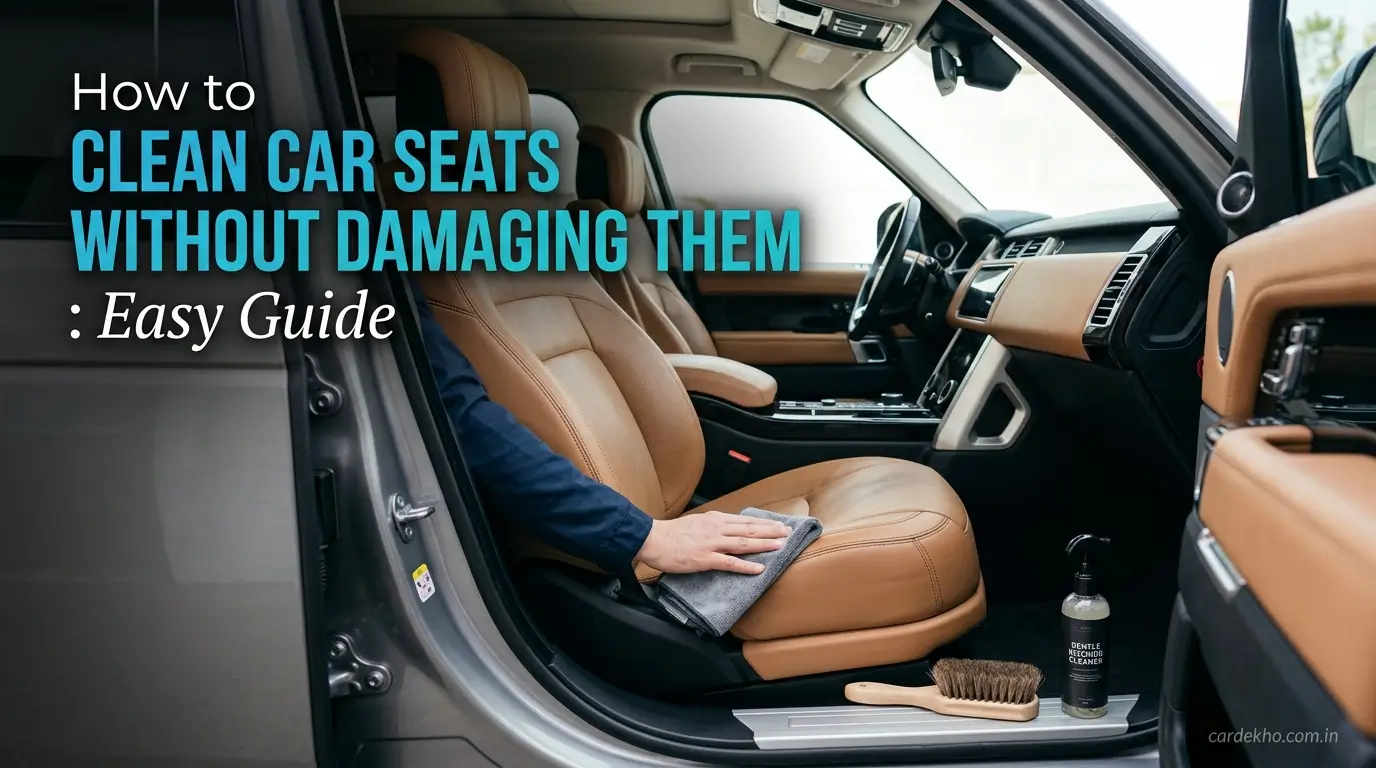
Welcome to CarDekho. Car seats collect dust, crumbs, food, drink spills, pet hair, and stains through everyday use. However, using the wrong cleaning method can cause discoloration, watermarks, unpleasant odors, or damage to the upholstery. Learning how to clean car seats without damaging them starts with identifying the seat material and choosing the right cleaning approach.
Fabric, leather, and vinyl seats do not all require the same treatment. Fabric seats can usually be cleaned with a suitable upholstery cleaner and gentle brushing, while leather requires products designed specifically for leather care. Regardless of the material, vacuuming first, testing products on a hidden area, controlling moisture, and allowing the seats to dry completely can help protect the upholstery while keeping the interior clean.
What to Know Before Cleaning Your Car Seats
Before applying any cleaner, identify the material and check the manufacturer’s recommendations.
Identify the Seat Material
Start by determining whether your seats are made from fabric, leather, vinyl, synthetic leather, or another material. Fabric is generally more absorbent, while leather and synthetic materials require different products and cleaning techniques.
If you are unsure about the material, check your vehicle’s owner’s manual or manufacturer’s information. Delicate materials may require special care, so confirm the correct cleaning method before using water or cleaning products.
Check the Owner’s Manual
Your owner’s manual may provide specific instructions about suitable cleaners, cleaning methods, and products to avoid. These recommendations are particularly important if your vehicle has heated seats, ventilated seats, or specialized upholstery.
Following the manufacturer’s guidance can help prevent you from using a product that is unsuitable for your particular seats.
Test the Cleaning Product First
Always test a new cleaning product on a small, hidden area before applying it to the entire seat. Check for changes in color, texture, or finish before continuing.
This simple step can help prevent a cleaning product from causing noticeable damage across the visible parts of the seat.
Tools and Products You Need
Having the right tools makes the cleaning process easier and helps reduce the risk of damaging the upholstery.
Basic Cleaning Tools
For most car seat cleaning jobs, you can start with a few simple items:
- Vacuum cleaner with a soft brush or crevice attachment
- Microfiber cloths
- Soft upholstery brush
- Suitable fabric, leather, or vinyl cleaner
- Clean water
- Dry towels
You do not necessarily need expensive detailing equipment. The most important thing is choosing products that are designed for the specific material you are cleaning.
Products to Avoid
Avoid strong household chemicals, abrasive products, and cleaners that are not recommended for your particular upholstery. Harsh products can affect leather finishes, while excessive water can soak into fabric seats and make drying more difficult.
Do not assume that a product that works well on another interior surface is automatically safe for your seats. Always read the product instructions before use.
Read also: Nissan 7 Seater Car Specifications, Features, Dimensions & More
How to Clean Fabric Car Seats Without Damaging Them
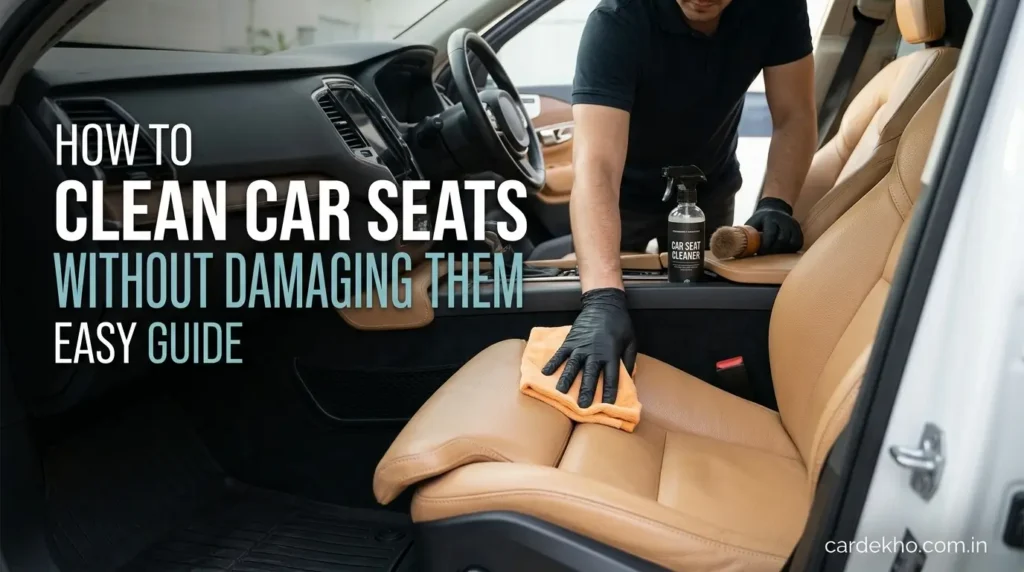
Fabric seats can usually be cleaned effectively at home when you control the amount of moisture and use gentle cleaning techniques.
Vacuum the Seats First
Begin by vacuuming the entire seat, paying particular attention to seams, gaps, and creases where crumbs, dust, hair, and sand can collect. Removing loose debris first prevents it from being rubbed deeper into the fabric during cleaning.
Use a soft brush attachment where possible, especially around delicate areas.
Apply Fabric Cleaner Carefully
Choose an upholstery cleaner designed for fabric car seats and follow its instructions. Apply enough product to clean the material without completely soaking the seat.
For a heavily stained area, concentrate on the affected section rather than unnecessarily wetting the entire seat. Controlled moisture also makes the seat easier to dry afterward.
Gently Agitate the Fabric
Use a soft upholstery brush or microfiber cloth to work the cleaner into the fabric. Gentle circular movements can help loosen dirt without being overly aggressive.
Avoid scrubbing hard, especially if the fabric is delicate or already showing signs of wear. Excessive friction can affect the appearance of the material.
Blot and Remove Excess Moisture
After cleaning, use a clean microfiber cloth or towel to blot away excess moisture and loosened dirt. Do not leave large amounts of cleaner sitting in the upholstery.
Too much liquid can penetrate into the foam underneath, making the seat difficult to dry and potentially contributing to unpleasant smells.
Let the Seats Dry Completely
Allow the seats to air dry thoroughly before using the vehicle normally. Good airflow can speed up the process, so opening the doors or windows in a suitable, safe location can help.
Do not cover or heavily use the seats while they are still damp. Complete drying is an important part of safe car seat cleaning.
How to Clean Leather Car Seats Without Damaging Them
Leather requires a gentler approach because unsuitable products, excessive moisture, and aggressive scrubbing can affect its protective finish.
Remove Dust and Loose Dirt
Start by vacuuming the leather seats using a soft attachment, paying attention to seams and crevices. You can also use a clean microfiber cloth to remove loose dust.
Removing grit before wiping the seats reduces the chance of rubbing abrasive particles across the leather surface.
Use a Leather-Safe Cleaner
Choose a cleaner specifically designed for automotive leather and follow the manufacturer’s instructions. Applying the cleaner to a microfiber cloth rather than directly onto the seat can give you better control over the amount of moisture.
Avoid flooding the surface, particularly if the seats are perforated. Excess liquid can enter the small holes and become difficult to remove.
Clean Gently in Small Sections
Work on one small section at a time using light pressure. A soft microfiber cloth or suitable soft brush can help lift dirt without aggressive scrubbing.
This approach also makes it easier to see which areas have already been cleaned and prevents large amounts of product from sitting on the surface.
Wipe Away Residue
After cleaning, use a separate clean microfiber cloth to remove remaining product and residue. Do not allow cleaner to dry on the leather.
Once the surface has been wiped, allow it to dry naturally before applying any additional leather-care product.
Condition the Leather When Recommended
Some leather seats may benefit from a suitable conditioner after cleaning. If your vehicle manufacturer or product instructions recommend conditioning, apply it according to the directions.
Avoid applying excessive conditioner. A thin, even application is generally easier to manage and leaves less residue on the surface.
How to Clean Vinyl and Synthetic Car Seats
Vinyl and synthetic upholstery can often be wiped clean relatively easily, but the material should still be treated according to the manufacturer’s recommendations.
Remove Surface Dirt
Vacuum or wipe the seat first to remove loose dust, crumbs, and grit. Pay attention to seams and edges where dirt tends to accumulate.
Starting with a dry surface makes it easier to see which areas actually need cleaning.
Use a Suitable Cleaner
Use a cleaner that is compatible with vinyl or synthetic upholstery. Apply a small amount to a microfiber cloth or follow the product’s recommended application method.
Work in small sections and wipe away residue rather than allowing the cleaner to remain on the surface longer than recommended.
Avoid Harsh Scrubbing
Do not use aggressive brushes or abrasive materials on vinyl and synthetic seats. Heavy scrubbing may affect the surface finish or leave visible marks.
Gentle wiping is usually preferable for routine cleaning, with extra attention given to areas containing stubborn dirt.
How to Remove Common Car Seat Stains
Different stains can require different approaches, but treating spills quickly can make cleaning easier.
Coffee and Drink Stains
Blot fresh spills with a clean cloth rather than rubbing them deeper into the upholstery. Once the excess liquid has been removed, use a cleaner suitable for the specific seat material.
Avoid soaking the seat simply because the spill is large. Controlled cleaning and thorough drying are more important than using a large amount of water.
Food and Grease Stains
Remove solid food particles before applying any cleaner. For greasy marks, use a product specifically designed for the upholstery rather than experimenting with strong household degreasers.
Always check the product instructions and test it on an inconspicuous area first.
Mud and Dirt
Allow heavy mud to dry when appropriate, then remove as much loose dirt as possible with a vacuum or soft brush. Applying cleaner to a thick layer of mud can spread the dirt across a larger area.
Once the loose material is gone, clean the remaining mark using a suitable upholstery product.
Ink and Dye Transfer
Ink and dye transfer can be more difficult to remove, particularly from light-colored upholstery. Avoid aggressive scrubbing because it can spread the mark or damage the material.
Use a product specifically intended for the upholstery type and follow its instructions carefully. For a severe or delicate stain, professional cleaning may be safer.
Pet Hair and Odors
Start by removing pet hair with a vacuum, brush, or other upholstery-safe method. For odors, clean the source rather than simply covering it with a strong fragrance.
If a musty smell remains after cleaning, check whether the seat is completely dry. Moisture trapped inside the upholstery can contribute to unpleasant odors.
How to Dry Car Seats After Cleaning
Proper drying is an important part of the cleaning process because moisture left inside the upholstery can lead to unpleasant smells and other problems.
Remove as Much Moisture as Possible
After cleaning, blot the seats with clean, dry microfiber towels to remove excess moisture. Avoid squeezing or aggressively rubbing the upholstery.
The goal is to leave the material clean and only slightly damp rather than heavily saturated.
Improve Airflow
Open the vehicle’s doors or windows in a safe location to improve airflow. Good ventilation can help moisture leave the upholstery more quickly.
If you use a fan, position it so air moves across the seats rather than relying on excessive heat to dry them rapidly.
Make Sure the Seats Are Completely Dry
Before closing the vehicle for an extended period, make sure the seats are fully dry. This blog is particularly important for fabric upholstery because moisture can remain below the surface even when the top feels dry.
If a seat continues to feel damp or develops a musty odor, it may need additional drying or professional attention.
Common Mistakes When Cleaning Car Seats
Avoiding a few simple mistakes can make the cleaning process much safer for your car’s interior.
Using Too Much Water
More water does not necessarily mean better cleaning. Excess moisture can penetrate deep into fabric upholstery and make the seat much harder to dry.
Use only the amount recommended by the cleaning product and remove excess moisture afterward.
Using the Wrong Cleaning Product
A cleaner designed for one material may not be suitable for another. For example, leather requires products designed for leather care, while fabric seats generally need upholstery-safe products.
Always check the label before applying a product to the seat.
Scrubbing Too Hard
Aggressive scrubbing can wear fabric, affect surface finishes, or make certain stains worse. Start with gentle pressure and increase it only when the material and product instructions allow it.
Skipping the Spot Test
Even a product marketed as safe can react differently with different materials, colors, or finishes. Testing a hidden area first gives you an opportunity to identify a problem before it becomes visible across the entire seat.
Ignoring the Manufacturer’s Instructions
Your vehicle’s manufacturer may have specific recommendations for cleaning and maintaining the upholstery. Ignoring these instructions can increase the risk of using an unsuitable method or product.
When in doubt, follow the vehicle and cleaning-product instructions before trying a DIY solution.
Tips to Keep Car Seats Clean for Longer
Regular maintenance can reduce the need for deep cleaning and help keep your car’s interior looking better.
- Vacuum regularly: Remove crumbs, dust, hair, and loose dirt before they become embedded.
- Clean spills quickly: Fresh spills are generally easier to deal with than old, dried stains.
- Avoid messy food in the car: Reducing spills and food debris makes regular maintenance easier.
- Use suitable seat protection: Where appropriate, seat covers can help protect upholstery from everyday dirt and wear.
- Control pet hair: Clean pet hair regularly instead of allowing it to accumulate.
- Follow leather-care recommendations: If your vehicle has leather seats, use recommended cleaning and conditioning products.
- Keep the interior ventilated: Good airflow can help prevent lingering odors after cleaning.
When Should You Get Professional Car Seat Cleaning?
Professional cleaning can be useful when car seats have severe stains, persistent odors, extensive dirt, delicate upholstery, or existing damage. It may also be a better option if a previous cleaning attempt has caused watermarks or discoloration.
For routine dirt and small spills, careful home cleaning is usually enough, but if you are unsure about the seat material or the correct cleaning product, professional advice can be safer than experimenting with harsh chemicals or aggressive cleaning methods.
Frequently Asked Questions About Cleaning Car Seats
Can I use household soap to clean car seats?
It is better to use a cleaner designed for the specific upholstery material. Household soaps may not be suitable for automotive fabric, leather, or vinyl, so check the manufacturer’s recommendations first.
Can I use a steam cleaner on car seats?
Steam cleaning is not automatically suitable for every car seat material. Check the vehicle and equipment manufacturer’s instructions before using steam, particularly on leather or delicate upholstery.
How often should I clean my car seats?
The ideal frequency depends on how often the vehicle is used and how quickly the seats become dirty. Regular vacuuming and prompt spot cleaning can reduce the need for frequent deep cleaning.
How can I remove bad smells from car seats?
First, identify and clean the source of the odor rather than simply masking it with fragrance. After cleaning, allow the upholstery to dry completely and use an upholstery-safe odor neutralizer if appropriate.
How do I clean car seats without making them too wet?
Use a controlled amount of material-appropriate cleaner and work in small sections. Blot away excess moisture and allow the seats to dry thoroughly before using the vehicle normally.
Conclusion
Learning how to clean car seats without damaging them is mainly about using the right method for the material. Vacuum first, test cleaning products on a hidden area, use gentle techniques, avoid excessive moisture, and give the seats enough time to dry completely. Fabric, leather, and vinyl all require slightly different care.
Regular cleaning and quick treatment of spills can keep your car seats looking better and reduce the need for aggressive deep cleaning. When a stain is severe, or the upholstery is delicate, professional cleaning may be the safer option than using an untested product at home.
