


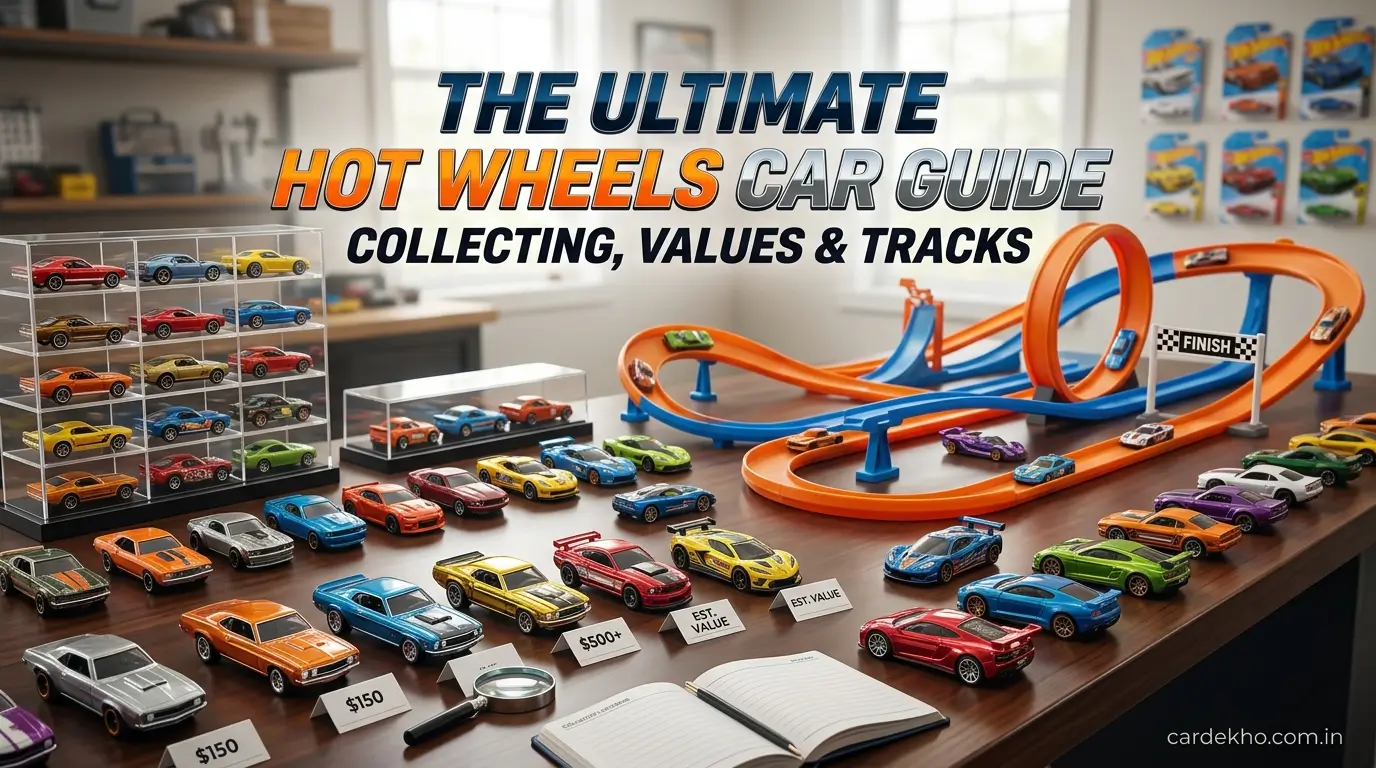
Welcome to CarDekho. A Hot Wheels car is far more than just a simple toy; it represents a global phenomenon spanning decades of die-cast innovation, design, and collecting passion. From classic castings to modern speed racers, these iconic 1:64 scale vehicles appeal to kids, hobbyists, and serious adult collectors alike across the world.
Whether you want to build high-speed track layouts or assemble a rare display collection, understanding the core details of die-cast models will drastically elevate your experience. This guide covers everything from manufacturing history and product tiers to rare treasure hunts, care techniques, and purchasing strategies.
The History and Evolution of Hot Wheels Cars
Mattel co-founder Elliot Handler introduced the first Hot Wheels car lineup in 1968 to compete with traditional European Matchbox vehicles, revolutionary for emphasizing custom hot-rod styling, bright metallic paints, and low-friction axles engineered specifically for speed on plastic tracks.
From Elliot Handler’s “Sweet 16” to a Global Die-Cast Empire
The original 1968 collection, known as the “Sweet 16,” debuted featuring iconic vehicles like the Custom Mustang, Camaro, and the Custom Fleetside. These 1:64 scale cars featured striking Spectraflame paint finishes and red-striped tires, giving rise to the famous vintage Red Line Club (RLC) moniker among modern enthusiasts.
Over the decades, this initial release expanded into a massive global die-cast empire that produces hundreds of millions of vehicles annually. Today, those early castings serve as the ultimate foundation for vintage die-cast collecting and high-value antique investments.
Key Innovations in 1:64 Scale Engineering
Hot Wheels revolutionized the industry by incorporating torsion-bar suspension and thin wire axles equipped with Delrin plastic wheels. This low-friction engineering allowed every die-cast metal body to glide rapidly across smooth surfaces, setting a new benchmark for toy performance.
This commitment to precision engineering transformed simple miniature cars into high-performance track racers. By continually refining wheel dynamics and weight distribution, the brand established an enduring standard for functional die-cast scale models.
Understanding Hot Wheels Tiers: Mainline, Silver, and Premium
Not every Hot Wheels car on store shelves is manufactured to the same specifications, as Mattel categorizes its product lineup into clear market tiers based on production quality, detailing, and target audience.
| Tier Category | Retail Price Range | Key Features | Target Audience |
| Mainline | $1.00 – $1.25 | Plastic base, plastic wheels, paper card | General public, kids, casual hunters |
| Silver / Mid-Tier | $2.50 – $4.00 | Enhanced tampos, full-card artwork | Track builders, intermediate fans |
| Premium / Car Culture | $6.00 – $7.00 | Metal/metal construction, Real Riders rubber tires | Adult collectors, detailed displayers |
| RLC / Exclusives | $25.00 – $40.00+ | High-gloss paint, opening parts, limited numbers | Die-hard brand investors |
Mainline Series: The Everyday Collector Standard
The mainline assortment is the core backbone of the brand, releasing approximately 250 distinct casting numbers each year. These standard single-carded vehicles are distributed in high volume to retail department stores inside blister packs on cardboard backings.
Because of their wide availability and affordable price point, mainlines serve as the entry point for almost every collector. They offer an accessible way to build an extensive catalog of modern street cars, hypercars, and imaginative fantasy designs.
Premium and Car Culture Lines: Real Riders and Metal/Metal Builds
Premium series like Car Culture, Team Transport, and Boulevard utilize heavy die-cast chassis matched with die-cast bodies. They feature detailed headlights, realistic paint schemes, and authentic synthetic Real Riders rubber tires.
These high-tier releases are built specifically for adult collectors who demand display-grade authenticity and realistic vehicle proportions. The added weight and rubber tire detailing make them standout pieces in any organized collection.
Special Releases: Red Line Club (RLC) and Store Exclusives
Mattel runs the online Red Line Club (RLC) for dedicated hobbyists, producing low-volume, individually numbered castings. Furthermore, retail chains frequently sell exclusive color variations known to collectors as “store zantics” or store exclusives.
Gaining access to these limited-run pieces often requires memberships or quick action during online drop events. Their scarcity and unique features make them prime targets for serious die-cast investors looking for long-term value.
Read also: Toyota Hyryder Car Price 2026: Variants, On-Road Cost & Specs
How to Spot Rare Hot Wheels: Treasure Hunts and Super Treasure Hunts
Searching through retail pegs for hidden chase vehicles is an exciting aspect of the hobby, as Mattel intentionally inserts rare variations into standard shipping cases worldwide.
Identifying Regular Treasure Hunts (TH)
A regular Treasure Hunt (TH) is produced in lower quantities than normal mainlines. You can spot them by looking for a small circular flame graphic behind the vehicle on the cardboard card, along with a hidden silver flame logo printed on the vehicle body.
While these cars use standard plastic wheels and baseline mainline paint, their limited production run makes them an exciting find on retail store pegs. Recognizing the distinct flame logo is a fundamental skill for any active collector.
Spotting Super Treasure Hunts (STH): Spectraflame Paint and Rubber Tires
A Super Treasure Hunt (STH) is the ultimate retail store find. These rare chase models feature upgraded high-gloss Spectraflame paint, real rubber tires, a hidden gold flame symbol on the packaging card, and a small “TH” script logo hidden somewhere on the body paint.
Because Mattel hides these premium upgrades inside standard mainline assortments, finding an STH requires a keen eye for subtle paint and tire differences. They command significant value on the secondary market due to their extreme scarcity.
How to Read Hot Wheels Case Codes on Store Pegs
Mattel ships mainlines in 72-car assortment boxes marked with specific case codes running from A through Q. By checking the three-digit alphanumeric code printed on the tHot Wheels card back, you can determine which specific mix produced that individual hot wheels car.
Understanding case codes allows collectors to track which new castings and chase cars are currently dropping in their region. It turns random store hunting into a strategic, informed search.
Hot Wheels Track Systems and Playsets
Setting up a high-speed Hot Wheels car track provides hands-on physics fun, where matching the right weight and chassis geometry with appropriate track layouts ensures high-speed stability through loops and turns.
Classic Orange Tracks vs. Modern Motorized Track Builders
The classic click-together orange track remains the standard setup for straight-line drag racing. Modern Track Builder expansion sets introduce multi-directional boosters, electronic timers, and motorized flywheels that accelerate vehicles around tight curves.
Choosing between traditional gravity tracks and powered launcher systems depends on your goal, whether simple head-to-head downhill racing or complex stunt layouts. Mixing both systems provides the most versatile track-building experience.
Track Compatibility and Car Performance Tips
- Choose heavier vehicles with wide bases for motorized boosters.
- Avoid extra-wide or unusually tall fantasy castings that clip loop margins.
- Keep axle points clean and free from carpet fibers or dust accumulation.
Proper vehicle selection and basic axle maintenance prevent crashes and ensure maximum speed on custom layouts.
Essential Collector Tips: Storage, Display, and Customization
Preserving condition is vital if you intend to maintain long-term physical and monetary value for your collection.
Carded (MOC) vs. Loose Collecting: Preserving Value
Collecting Mint on Card (MOC) keeps the original blister pack sealed and undamaged, which preserves maximum collector resale value. Unboxing vehicles (“loose collecting”) allows for physical handling, detailed photography, track testing, and custom display arrangements.
Deciding between sealed cards and loose displays ultimately comes down to personal collecting goals. Many hobbyists maintain a dual approach, keeping rare chase pieces sealed while opening common mainlines for track use.
Display Solutions and Environmental Protection
Direct sunlight, high humidity, and extreme temperatures can fade paint graphics and warp cardboard backing cards. Protect valuable carded pieces using clear plastic clamshell protectors, and place loose vehicles inside dust-proof clear acrylic display cases away from windows.
Investing in proper display cases ensures your cars stay dust-free and vibrant over time. Environmental control is the single most effective way to protect long-term financial value.
Intro to Customs: Wheel Swaps and Detail Painting
Customizing a Hot Wheels car is a popular hobby offshoot. Hobbyists carefully drill out the underside brass rivets, strip factory paint, apply fresh primer, hand-paint interior dashboard details, and execute an aftermarket wheel swap using rubber tires.
This creative aspect of the hobby allows collectors to transform basic mainlines into one-of-a-kind art pieces. With a few basic tools, anyone can personalize designs and upgrade stock models to premium standards.
Common Collector Mistakes to Avoid
Avoiding widespread beginner mistakes will save both money and effort, helping you build a higher-quality collection faster.
- Paying Scalper Prices Immediately: Avoid paying inflated prices for fresh retail releases; mainline stock usually saturates local markets over time.
- Ignoring Card Condition: Storing carded vehicles loosely in large bins leads to soft corners, creased cardboard, and cracked plastic blisters.
- Exposing Displays to Sunlight: UV light rapidly degrades transparent plastic blister bubbles and fades graphic paint decals.
- Neglecting Case Codes: Shopping randomly without knowing active factory shipping cycles reduces your chances of finding chase cars.
Frequently Asked Questions (FAQ)
What is the best way to verify if an uncarded vintage model has original factory paint?
Examine the casting under magnification for casting seam overspray, original primer layers, and authentic badge tempographics that match Mattel’s historical manufacturing stamps.
How can collectors connect with local die-cast trading communities?
Participate in regional die-cast swap meets, join dedicated hobby forums, and engage with verified collector groups on social media platforms to trade and network safely.
What role do designer signatures play in determining a model’s collectible value?
Castings signed by iconic Mattel designers like Larry Wood or Jun Imai carry significant premium value among serious collectors and auction investors.
Are customized Hot Wheels eligible for entry in official die-cast racing leagues?
Many independent die-cast racing leagues host specific modified weight classes, though stock tournaments require factory-unaltered wheels and chassis.
Which retail stores are known for carrying exclusive color variations?
Major retailers such as Walmart, Target, and Dollar Tree regularly contract with Mattel to sell store-exclusive colorways and unique card series.
Conclusion
Collecting die-cast cars is a rewarding hobby that brings together history, creativity, and community. Whether you love searching store pegs for hidden treasures, setting up fast track layouts, or customizing your own designs, there is always something new to explore. Understanding the different model tiers, case codes, and preservation techniques helps you make smart choices and grow a meaningful collection over time.
You do not need a huge budget to enjoy this passion. Start by picking up vehicles that genuinely match your personal interests, take good care of your display, and connect with other local collectors. As your collection expands, you will discover that every small car tells its own unique story.
