

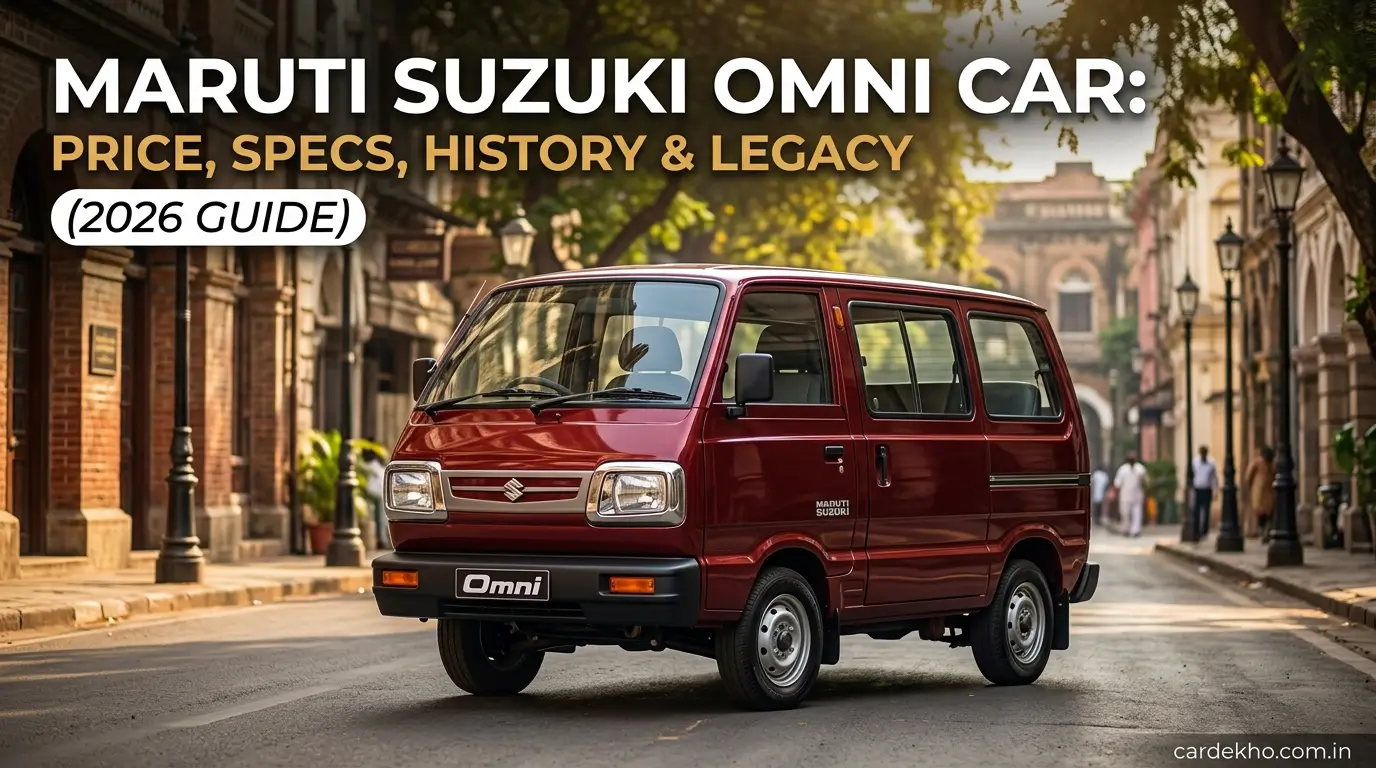
Welcome to CarDekho. The Omni car, officially launched as the Maruti Van in 1984, remains one of the most recognizable vehicles in Indian automotive history. Designed as a microvan, it revolutionized family transit, small business logistics, and school transportation across the country for over three decades.
Despite modern safety standards eventually ending its production run, the Omni car maintains a dedicated following in the second-hand automobile market. This guide covers its history, technical specifications, safety factors, used market value, and cultural legacy.
History of the Omni Car: How India’s Iconic Van Saved & Served Families
The Omni car stands as one of the most versatile and impactful vehicles in Indian automotive history, transforming the way middle-class families traveled and small businesses operated. Launched at a time when personal mobility was a luxury, this utilitarian microvan bridged the gap between affordable passenger cars and heavy commercial transport, serving as a family carrier, school bus, and ambulance for over three decades.
1984 Launch: From Maruti Van to Omni
Maruti Suzuki introduced the vehicle simply as the “Maruti Van” in 1984, shortly after the debut of the Maruti 800. Built on the Suzuki Carry platform, it offered unparalleled cabin space relative to its compact exterior footprint.
In 1988, Maruti rebranded the vehicle as the omni car, introducing functional updates to appeal to both commercial operators and large families needing an affordable multi-utility vehicle.
Evolution Across 35 Years (1984–2019)
Over its 35-year production run, the vehicle underwent minimal structural changes, proving the utility and longevity of its original blueprint. The platform adapted to various commercial and private transport demands without losing its foundational appeal.
Continued updates kept the vehicle relevant across decades of changing market needs. Key milestones throughout its lifecycle include:
- 1998 Facelift: Introduced restyled headlight surrounds, a modernized dashboard, and refined interior upholstery.
- Cargo & Ambulance Variants: Purpose-built versions added flat floor beds, removed rear seating, or incorporated specialized medical fittings for municipal service.
- LPG & CNG Introductions: Factory-fitted alternative fuel options appeared in the mid-2000s to lower operational costs for commercial transport.
Maruti Suzuki Omni Specifications & Key Features
The Maruti Suzuki Omni was engineered around a simple cab-over design, maximizing interior utility while maintaining a minimal vehicle footprint. Powered by a reliable sub-1-liter powertrain, its lightweight body structure delivered low operational costs, making it a staple for both personal and commercial transit.
Engine Performance & Mileage
The vehicle relied on a proven 796cc three-cylinder engine paired with a 4-speed manual transmission. Designed for high low-end torque, this powertrain allowed the microvan to carry substantial loads relative to its compact capacity.
The engine delivered efficient fuel figures across its petrol and factory-fitted alternative fuel variants, maintaining low operating overheads for owners.
- Engine Capacity: 796cc F8B petrol engine
- Maximum Power: 34.2bhp@5000rpm
- Maximum Torque: 59Nm@3000rpm
- Fuel Efficiency: 16.8km/l (Petrol) / 10.9km/kg (LPG/CNG variants)
Dimensions, Capacity & Weight
The vehicle’s dimensions allowed it to navigate narrow city lanes and tight parking spaces effortlessly. Its low curb weight contributed directly to its fuel efficiency and light handling.
Despite its compact exterior proportions, the high roofline and flat sides maximized usable cabin volume.
- Length: 3250mm
- Width: 1415mm
- Height: 1640mm
- Wheelbase: 1840mm
- Curb Weight: 785kg
- Ground Clearance: 165mm
Cabin Layout & Seating Configurations (5-Seater vs 8-Seater vs Cargo)
Maruti Suzuki offered the vehicle in three primary seating and spatial layouts, making it adaptable to widely varied user requirements. The sliding side doors provided easy access to the rear compartment in cramped loading zones.
The factory configurations catered to families, passenger transport operators, and commercial logistics services alike.
- 5-Seater Family Variant: Featured two front seats and a three-person rear bench with ample boot space.
- 8-Seater Variant: Included face-to-face rear bench seats designed to maximize passenger headcount.
- Cargo Van: Stripped of rear seating, offering a flat cargo bed for urban deliveries.
| Specification | Details |
| Engine | 796cc, 3-Cylinder F8B |
| Transmission | 4-Speed Manual |
| Fuel Tank Capacity | 36Liters |
| Seating Options | 5-Seater, 8-Seater, Cargo |
| Fuel Type | Petrol / LPG / CNG |
Read also: Isuzu Car in Pakistan: Price, Models, Specs and Features
Why Was the Maruti Omni Discontinued?
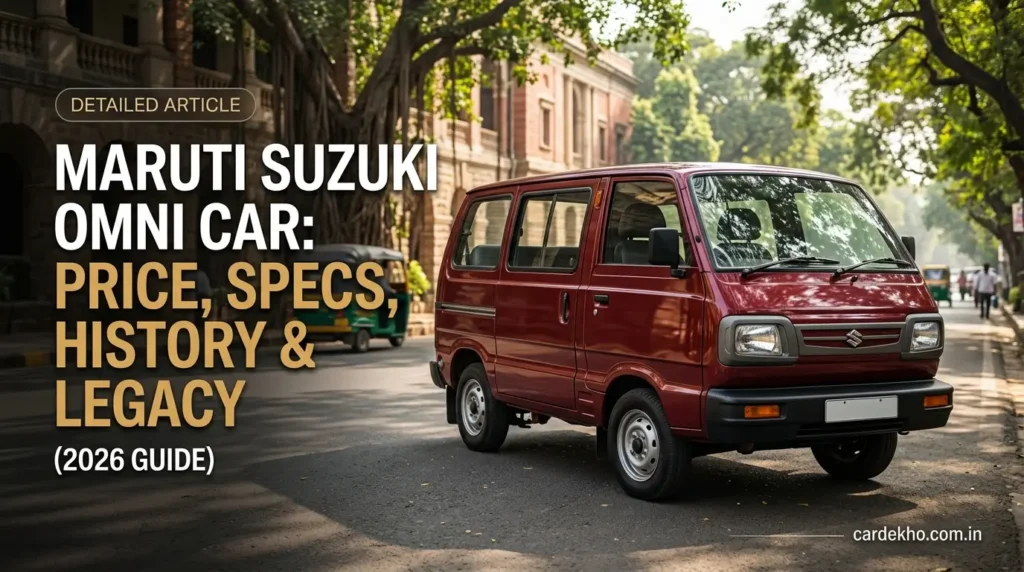
The Omni car was officially phased out in October 2019 after a remarkable 35-year production run. While it remained a popular multi-utility vehicle and steady seller, evolving environmental regulations and strict structural safety standards made its long-running design impossible to adapt to modern automotive requirements.
Bharat Stage VI (BS6) Emission Norms
The Indian government mandated the transition to Bharat Stage VI (BS6) emission regulations to drastically cut down harmful vehicle emissions nationwide. Upgrading the vehicle’s aging 796cc three-cylinder engine to meet these strict environmental benchmarks proved structurally and financially unfeasible.
Because the engine sat directly under the front seat, the engine bay lacked the spatial clearance needed for advanced exhaust treatment systems and modern catalytic converters. Redesigning the engine bay and chassis to accommodate these components would have required building an entirely new vehicle platform from the ground up.
Crash Test & BNVSAP Safety Regulations
The introduction of the Bharat New Vehicle Safety Assessment Program (BNVSAP) established strict mandatory crash-safety requirements for all cars sold in India. The Omni car could not meet these safety parameters due to fundamental engineering limitations inherent to its 1980s blueprint.
- Lack of Crumple Zones: The flat-front cab-over design meant the driver and front passenger sat directly behind the front bumper without a bonnet structure to absorb front-impact collision forces.
- Absence of Safety Features: Modern safety requirements such as anti-lock braking systems (ABS), dual front airbags, reverse parking sensors, and side-impact protection bars could not be integrated into the aging chassis architecture without making production costs economically unviable.
Arrival of the Maruti Suzuki Eeco
To retain its dominance in the commercial van and multi-passenger segment, Maruti Suzuki shifted its complete focus to the Maruti Suzuki Eeco. Launched as a modernized successor, the Eeco was engineered to handle stricter safety standards and larger engines with ease.
The Eeco offered a front-engine layout with proper crash-absorption space, a larger 1.2L engine, updated driver safety features, and full compliance with evolving emission and crash-test regulations, effectively filling the gap left by the retired van.
Buying a Used Omni Car Today: Price, Variants & Buyer Checklist
The Omni car remains a popular choice in India’s pre-owned vehicle market for buyer groups seeking budget-friendly utility, cargo transport, or a platform for micro-camper conversions. While official production ceased in 2019, strong resale demand persists due to its minimal maintenance costs and abundant spare parts availability nationwide.
Second-Hand Omni Price Guide (2026 Market)
In the secondary automotive market, pricing varies based on vehicle condition, total mileage, local fitness certificates, and whether the vehicle holds a commercial or private registration. Older models generally suit short-distance local haulage, whereas post-2015 models command higher value for personal usage.
- 2010–2014 Models: ₹40,000 – ₹80,000
- 2015–2019 Models: ₹90,000 – ₹1,500,000
Key Things to Inspect Before Buying a Used Omni
Purchasing a pre-owned microvan requires thorough mechanical and structural checks, as many units saw heavy-duty commercial service throughout their operating lifecycle.
Evaluating these core mechanical areas helps ensure a reliable purchase decision:
- Floor Panel Rust: Inspect underbody panels and wheel arches for structural corrosion or rust patches.
- Engine Compression & Oil Leaks: Access the engine bay directly under the front seats to check for valve cover leaks, blown gaskets, or excessive exhaust smoke.
- Sliding Door Alignment: Test the sliding side doors to ensure the rollers, tracks, and locking mechanisms lock securely and operate smoothly.
Pop Culture, Kidnapping Tropes & Custom Omni Conversions
The omni car holds a unique position in Indian popular culture, transitioning over the decades from a symbol of middle-class family utility to a recognizable icon on the movie screen. Its boxy design and functional interior have inspired cinematic tropes, digital meme culture, and practical aftermarket modifications alike.
The Bollywood “Kidnapping Car” Meme Culture
During the 1990s and early 2000s, Indian cinema frequently featured the vehicle in action and crime genres as the go-to getaway van for onscreen villains. Its wide dual-sliding doors, dark-tinted windows, and sheer ubiquity on city roads made it a convenient cinematic plot device for fast-paced abduction sequences.
This recurring cinematic trope eventually evolved into an enduring internet meme. On social media platforms, the vehicle is often jokingly labeled the ultimate “kidnapping car,” turning a former real-world utility van into a nostalgic pop-culture humor phenomenon across South Asia.
Micro Camper Van Conversions & Overlanding
In recent years, budget travelers and DIY enthusiasts have repurposed used models into compact, functional micro camper vans. The vehicle’s rectangular proportions and flat floor structure offer a practical layout for custom modular camper setups without requiring major structural modifications.
Overlanding enthusiasts utilize these conversions for short-distance trips and weekend camping:
- Modular Sleeping Platforms: Fitting folding wooden bed frames over the rear wheel arches to create a flat sleeping surface.
- Integrated Storage Solutions: Installing pull-out kitchenette drawers, water storage cans, and battery power banks in the under-bed cargo area.
Pros and Cons of Owning an Omni Car
| Pros | Cons |
| High fuel efficiency and low maintenance costs | Lacks modern safety features (airbags, ABS) |
| Sliding doors offer excellent access in tight spaces | Poor front crumple zone protection |
| Compact turning radius ideal for narrow streets | Basic interior features and lack of power steering |
Frequently Asked Questions
How did the Maruti Omni earn its reputation as a reliable utility vehicle for small business owners?
Its rear-wheel-drive layout combined with a high power-to-weight ratio allowed it to easily haul heavy loads up steep inclines where standard hatchbacks struggled.
What made the Omni’s floor design unique compared to modern passenger cars?
It featured a completely flat floor pan without a transmission tunnel hump, maximizing effective cargo volume and allowing flat-bed stacking for goods.
How did the sliding side door mechanism benefit urban deliveries in tight alleyways?
Because the doors slid parallel to the body rather than swinging outward, operators could load and unload cargo in narrow lanes without needing clearance space.
Why was the engine placement under the front seats considered both an advantage and a drawback?
While it maximized interior cabin room within a small footprint, it transferred engine heat directly into the cabin and made routine maintenance access cumbersome.
What mechanical feature contributed most to the Omni’s low long-term maintenance costs?
Its simple carburetor-based (and later basic MPFI) engine paired with a mechanical cable setup minimized electronics, making repairs simple and affordable for local mechanics.
Conclusion
The Omni car remains a true icon of Indian automobile history. It served as a reliable workhorse for families, schools, and small businesses for over 30 years. Even though production stopped due to modern safety and emission rules, its utility and low maintenance cost keep it relevant today.
In the second-hand market, it continues to be a top choice for budget-friendly transport and custom micro-camper conversions. Its legacy as a versatile, everyday multi-utility vehicle remains untouched.
