

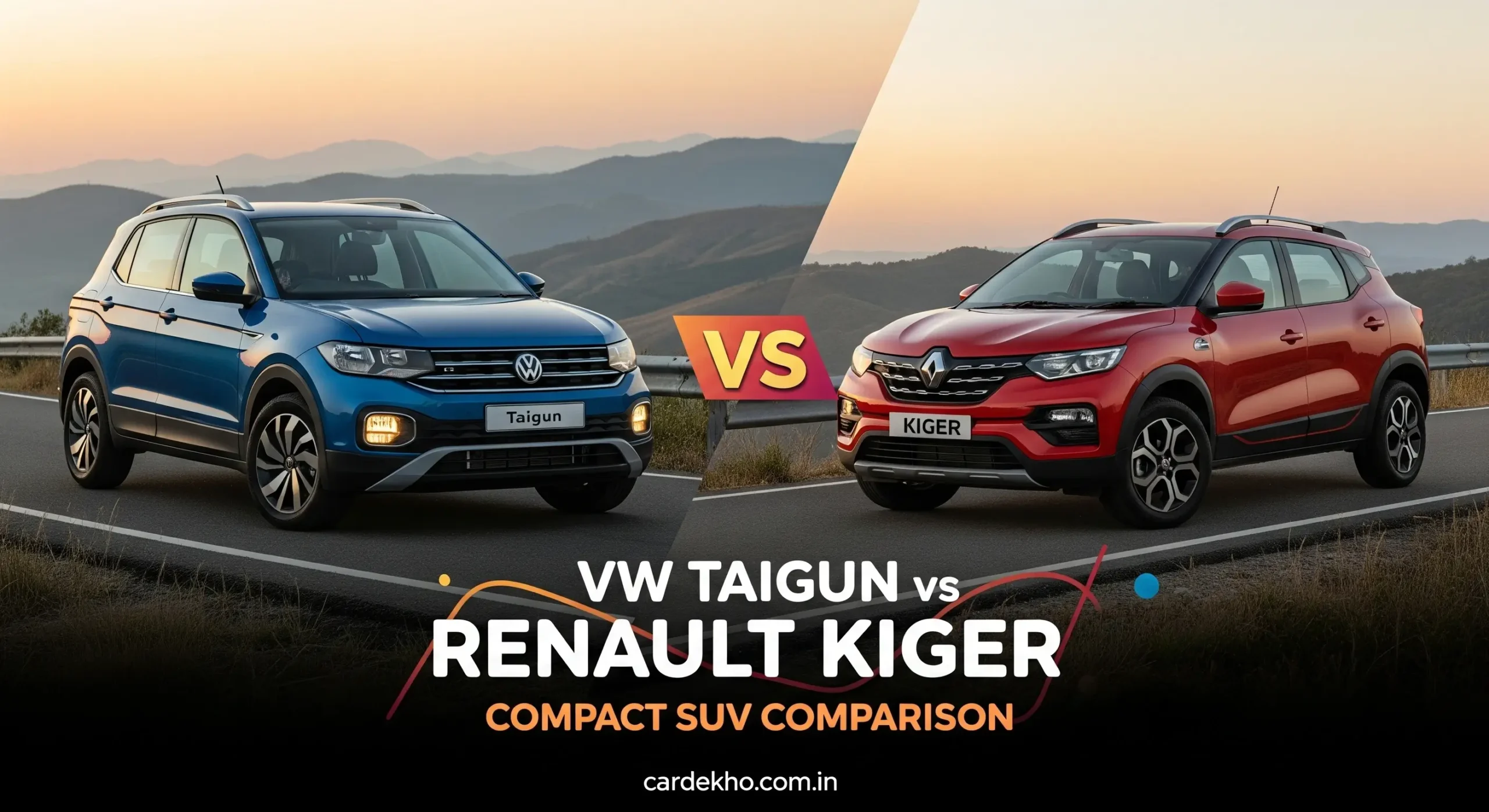
Compact SUV segment has seen a massive surge in popularity in 2025, as more urban buyers prefer vehicles that combine style, practicality, and efficiency. Among these, the VW Taigun and Renault Kiger have emerged as two of the most competitive options in the market. Both SUVs promise a blend of modern design, advanced features, and efficient performance, making them ideal choices for city commuting as well as occasional long drives. With compact dimensions yet spacious interiors, these vehicles are tailored for families and young professionals looking for the perfect balance between affordability and premium features.
VW Taigun 2025 brings a German-engineered feel with precise handling, robust build quality, and a sophisticated design language that appeals to buyers seeking a premium compact SUV. On the other hand, the Renault Kiger focuses on affordability without compromising on style and comfort, offering a bold exterior, decent performance, and a feature-rich cabin. Both SUVs cater to the growing demand for compact yet versatile vehicles that can easily navigate congested city streets while maintaining highway performance.
This article aims to provide a comprehensive VW Taigun vs Renault Kiger comparison to help potential buyers make an informed decision. From design and interior comfort to engine performance, safety features, fuel efficiency, and pricing, we will cover every crucial aspect of these compact SUVs. By the end of this comparison, readers will have a clear understanding of which SUV aligns better with their preferences, whether they prioritize performance, technology, affordability, or overall value for money. This guide serves as a complete roadmap for anyone considering a purchase in the competitive compact SUV segment of 2025.
VW Taigun Overview
The VW Taigun 2025 has quickly gained attention in the compact SUV segment due to its premium build quality, stylish design, and advanced features. Combining German engineering with modern aesthetics, the Taigun offers a perfect mix of performance, comfort, and safety. This SUV is ideal for buyers who want a compact yet luxurious vehicle that performs efficiently in city traffic while remaining capable on highways. With multiple variants and engine options, the Taigun provides flexibility for diverse driving needs, making it one of the most desirable compact SUVs of 2025.
In addition to its performance and style, the Taigun focuses on delivering a superior user experience with a well-designed cabin, an intuitive infotainment system, and comprehensive safety features. It’s not just about looks; the Taigun ensures practicality with spacious seating, ample storage, and ergonomic controls, making daily commutes and long drives equally comfortable. This combination of aesthetics, performance, and utility positions the VW Taigun as a strong competitor in its segment.
Design and Exterior
The exterior of the VW Taigun is bold and contemporary, featuring sharp lines, muscular wheel arches, and a dynamic stance. Its LED headlights and DRLs (Daytime Running Lights) not only enhance visibility but also give the SUV a modern, aggressive look. The alloy wheels add a touch of elegance while maintaining a sporty appeal, and the compact dimensions ensure ease of maneuverability in urban areas. Every design element of the Taigun reflects VW’s signature styling, combining elegance with athleticism.
On the rear, the Taigun sports a sleek LED taillight design, integrated roof rails, and a subtle spoiler, enhancing both aesthetics and aerodynamics. Its compact size doesn’t compromise interior space, allowing for a practical yet stylish vehicle that suits city driving and highway cruising alike. Overall, the Taigun’s design is a balanced blend of modern sophistication and functional elegance, making it visually appealing while remaining highly practical.
Engine and Performance
The VW Taigun offers multiple engine options to cater to varying driving needs. The 1.0L Turbo Petrol engine provides an ideal balance between power and fuel efficiency, while the 1.5L TSI engine delivers higher torque and smoother highway performance. Both engines are designed to ensure responsive acceleration, stable handling, and minimal vibrations, providing a refined driving experience in both city traffic and long-distance trips.
Additionally, the Taigun features advanced transmission options, including a manual gearbox and an automatic DSG variant, allowing drivers to choose based on their preference. Its suspension system is tuned for comfort and stability, ensuring a smooth ride even on uneven roads. Overall, the Taigun’s engine and performance capabilities make it a confident and enjoyable SUV to drive, whether you prioritize efficiency or power.
Interior and Comfort
The Taigun’s interior reflects a premium approach with high-quality materials, soft-touch surfaces, and well-placed controls. The spacious cabin offers ample legroom and headroom for both front and rear passengers, ensuring comfort during long journeys. The digital instrument cluster, touchscreen infotainment system, and connected features elevate the driving experience, making technology an integral part of the SUV’s appeal.
Moreover, the Taigun focuses on practicality with foldable rear seats, generous boot space, and multiple storage compartments. Climate control, comfortable seating, and ergonomic layout enhance overall comfort, ensuring that both driver and passengers enjoy a premium SUV experience. In essence, the interior of the Taigun combines luxury, technology, and functionality seamlessly.
Safety Features
Safety is a key focus for the VW Taigun, offering a comprehensive suite of features to protect occupants. The SUV comes equipped with multiple airbags, ABS with EBD, electronic stability control (ESC), and hill-hold assist, ensuring confidence in diverse driving conditions. Its robust build quality and crash safety ratings make it one of the safer options in the compact SUV segment.
Advanced driver assistance features like parking sensors, rearview camera, and tire pressure monitoring further enhance overall safety. Whether navigating busy city streets or cruising on highways, the Taigun ensures that safety is never compromised, providing peace of mind for drivers and families alike.
Renault Kiger Overview
The Renault Kiger 2025 has quickly established itself as a popular choice in the compact SUV segment, offering a perfect blend of style, affordability, and practicality. Its bold design, fuel-efficient engines, and feature-rich cabin make it highly appealing for young buyers and small families who need a versatile urban vehicle. Despite its compact size, the Kiger provides a spacious interior, modern technology, and a confident road presence, making it a strong contender in its class.
Renault has focused on making the Kiger a practical yet stylish SUV that is easy to drive in city traffic while remaining capable on highways. With multiple variants and engine options, it caters to a wide range of buyer preferences, from budget-conscious individuals to those looking for advanced features in a compact package. The Kiger is designed to provide an enjoyable driving experience without compromising on comfort or utility.
Design and Exterior
The Renault Kiger features a bold and modern exterior design that instantly grabs attention. Its signature front grille, sharp LED DRLs, and sculpted body lines give the SUV a confident and sporty look. The alloy wheels complement its dynamic stance, while the compact dimensions make it highly maneuverable in urban settings. Every design element of the Kiger reflects Renault’s commitment to creating a youthful, stylish, and functional SUV.
At the rear, the Kiger boasts sleek LED tail lamps, a roof spoiler, and a muscular bumper design that enhances both aesthetics and aerodynamics. Its compact yet aggressive design makes it suitable for city roads and highways alike, ensuring that it stands out without compromising practicality. The Kiger’s exterior design strikes a balance between style, functionality, and urban adaptability.
Engine and Performance
The Renault Kiger offers multiple engine options, including a 1.0L Turbo Petrol and a 1.0L Naturally Aspirated Petrol variant, catering to different driving preferences. The turbo variant delivers a responsive and energetic driving experience, while the naturally aspirated engine focuses on fuel efficiency and smooth city commuting. Both engines are paired with manual and AMT (automated manual transmission) options, providing flexibility for drivers.
The Kiger’s suspension is tuned for comfort, absorbing bumps efficiently while maintaining stability during cornering. Its lightweight chassis and responsive steering ensure easy maneuverability in tight city spaces, while the turbo engine provides sufficient power for highway cruising. Overall, the Kiger delivers a balanced performance suitable for both urban and semi-urban driving conditions.
Interior and Comfort
Inside, the Renault Kiger offers a modern and functional cabin with a focus on ergonomics and passenger comfort. The SUV features a touchscreen infotainment system with smartphone connectivity, a digital instrument cluster, and comfortable seating for five passengers. Despite its compact footprint, the Kiger’s cabin provides ample legroom and headroom, making long journeys more enjoyable.
Practicality is a key highlight, with foldable rear seats, generous boot space, and multiple storage compartments. Air conditioning, supportive seats, and easy-to-use controls enhance comfort for both driver and passengers. The Kiger’s interior strikes a balance between modern technology, functionality, and comfort, making it a user-friendly SUV for everyday use.
Safety Features
Safety is a priority for the Renault Kiger, offering essential features to ensure driver and passenger protection. It comes equipped with dual airbags, ABS with EBD, electronic stability control, and rear parking sensors, providing a reliable safety package for city and highway driving. The SUV also includes features like seatbelt reminders and ISOFIX child seat mounts for added family safety.
While the Kiger focuses on affordability, it does not compromise on basic safety. Its sturdy build, combined with active and passive safety features, ensures peace of mind for drivers and passengers. The Kiger’s safety package makes it a dependable choice for urban commuters and small families seeking a practical compact SUV.
VW Taigun vs Renault Kiger: Detailed Comparison
When it comes to choosing between the VW Taigun 2025 and Renault Kiger 2025, buyers need to consider multiple aspects, including design, performance, comfort, and safety. Both SUVs cater to the compact segment but offer distinct advantages depending on the priorities of the user. While the Taigun emphasizes premium build quality, robust performance, and modern technology, the Kiger focuses on affordability, fuel efficiency, and urban-friendly design. This detailed comparison aims to highlight the key differences and help buyers make an informed choice.
The compact SUV segment in 2025 is highly competitive, and both these vehicles bring unique strengths. The Taigun, with its German-engineered design and advanced features, appeals to buyers seeking refinement and long-term reliability. Meanwhile, the Renault Kiger attracts budget-conscious buyers who want a stylish, feature-rich vehicle without compromising on everyday usability. Understanding these differences can make the purchasing decision simpler and more aligned with the buyer’s needs.
Design & Exterior Comparison
The VW Taigun features a bold, sophisticated design with sharp lines, LED DRLs, and a dynamic stance. Its muscular wheel arches and sporty alloy wheels give it a premium and athletic appearance, making it stand out on both city streets and highways. The overall exterior design emphasizes elegance combined with practicality, ensuring a confident road presence.
In comparison, the Renault Kiger offers a youthful, aggressive design with a signature front grille, LED DRLs, and aerodynamic body lines. While it has a slightly smaller footprint than the Taigun, it excels in urban maneuverability. Its compact dimensions and striking design make it ideal for city driving, though it may feel slightly less premium than the Taigun in terms of build quality.
Engine & Performance Comparison
The VW Taigun comes with a 1.0L Turbo Petrol and a 1.5L TSI engine, offering a balance of power and fuel efficiency. Its engines deliver smooth acceleration, high torque, and confident highway performance. The optional DSG automatic transmission ensures seamless gear shifts and a comfortable driving experience in traffic-heavy cities.
On the other hand, the Renault Kiger features a 1.0L Turbo Petrol and 1.0L Naturally Aspirated engine. While it offers decent power and good fuel economy, its performance is slightly less refined compared to the Taigun. The Kiger’s AMT and manual options provide flexibility, making it an ideal choice for urban driving, though long-distance highway performance may feel less dynamic than the Taigun.
Interior & Comfort Comparison
Inside the VW Taigun, the cabin is spacious, premium, and technologically advanced. The digital instrument cluster, touchscreen infotainment system, and quality materials create a luxurious feel. Seating comfort, climate control, and generous storage compartments enhance overall usability for both city commutes and long journeys.
The Renault Kiger, while more budget-friendly, also offers a functional and comfortable interior. It features a touchscreen infotainment system, digital instrument cluster, and ample legroom. Practical storage solutions and ergonomic seating make it convenient for daily use. While it may not match the Taigun’s premium feel, it delivers solid comfort and practicality at a more affordable price point.
Safety & Features Comparison
The VW Taigun excels in safety with multiple airbags, ABS with EBD, ESC, hill-hold assist, and advanced driver assistance systems. Its robust build and crash safety ratings provide high confidence in both city and highway driving conditions.
The Renault Kiger offers essential safety features such as dual airbags, ABS with EBD, electronic stability control, and rear parking sensors. While it covers the basics well, it lacks some of the advanced safety technologies found in the Taigun. For buyers prioritizing comprehensive safety, the Taigun has a clear advantage, while the Kiger offers sufficient protection for everyday urban driving.
Fuel Efficiency & Maintenance
Fuel efficiency is one of the most important factors for buyers in the compact SUV segment, and both the VW Taigun 2025 and Renault Kiger 2025 offer competitive mileage. The Taigun’s 1.0L Turbo Petrol engine delivers excellent fuel economy in city conditions, while the 1.5L TSI engine balances performance and efficiency on highways. On average, the Taigun provides 16–18 km/l, making it suitable for daily commutes and long-distance drives without frequent fuel stops.
The Renault Kiger focuses more on urban efficiency, with its 1.0L Turbo and Naturally Aspirated engines offering 17–19 km/l, depending on driving conditions. The Kiger’s lightweight design and compact dimensions contribute to better mileage, making it an economical choice for city drivers. While its performance is slightly less powerful than the Taigun, the Kiger compensates with lower running costs and higher fuel efficiency for budget-conscious buyers.
When it comes to maintenance, the VW Taigun may have slightly higher service costs due to its premium build and German-engineered components. Regular servicing, quality parts, and advanced technology ensure long-term reliability but at a higher cost. In contrast, the Renault Kiger offers lower maintenance expenses, affordable spare parts, and easier servicing at local workshops. For long-term ownership, the choice depends on whether you prioritize premium engineering and performance (Taigun) or cost-effective daily usability (Kiger).
Pricing & Variants
Pricing plays a crucial role in the decision-making process when choosing a compact SUV. The VW Taigun 2025 is positioned as a premium offering in the segment, reflecting its German engineering, advanced features, and robust build quality. Its variants cater to different buyer needs, ranging from a well-equipped base model to fully-loaded premium options. While the Taigun is priced slightly higher, it delivers superior performance, technology, and safety features that justify the cost for buyers looking for a premium compact SUV experience.
On the other hand, the Renault Kiger 2025 focuses on affordability and value for money. It offers multiple variants to suit budget-conscious buyers while maintaining essential features, fuel efficiency, and stylish design. The Kiger’s pricing strategy ensures that even the top variants remain competitive, making it an ideal choice for urban commuters and small families who want a practical, feature-rich SUV without stretching their budget.
VW Taigun Price and Variants
The VW Taigun comes in several variants, including Trendline, Comfortline, and Highline, each offering different feature levels. The base Trendline is well-equipped with essential safety and technology features, while the Highline variant includes premium amenities like a digital cockpit, advanced infotainment, and additional safety systems. Prices for the Taigun range from approximately ₹11.99 lakh to ₹17.49 lakh, depending on the variant and engine choice.
Each Taigun variant is carefully designed to provide a balance between performance, comfort, and technology. Buyers opting for the higher trims benefit from features such as leather upholstery, automatic climate control, and advanced driver assistance systems, enhancing the overall premium experience. The Taigun ensures that there is a suitable option for every buyer seeking a compact SUV with German engineering reliability.
Renault Kiger Price and Variants
The Renault Kiger is available in variants like RXE, RXL, RXT, and RXZ, offering a mix of basic to feature-rich options. The base RXE variant provides essential features, while the top RXZ variant comes with premium offerings such as touchscreen infotainment, automatic climate control, and advanced safety features. Prices range from approximately ₹6.99 lakh to ₹11.99 lakh, making it a highly competitive option in the compact SUV segment.
The Kiger’s pricing strategy allows it to attract a wide range of buyers, from first-time car owners to small families looking for a stylish yet affordable SUV. Even the mid-range variants come equipped with modern technology and comfort features, ensuring that cost-conscious buyers do not compromise on usability or style. Its affordability, combined with practical features, makes it one of the most value-for-money compact SUVs available in 2025.
Pros and Cons of VW Taigun vs Renault Kiger
| Aspect | VW Taigun 2025 – Pros | VW Taigun 2025 – Cons | Renault Kiger 2025 – Pros | Renault Kiger 2025 – Cons |
| Design & Exterior | Premium, stylish German design with sharp lines and LED DRLs. Strong road presence and sporty appeal. | A slightly bigger size may be less maneuverable in tight city spaces. | Bold, youthful design with signature grille and LED DRLs. Compact size is city-friendly. | Exterior feels less premium compared to Taigun; some plastic elements lower perceived quality. |
| Engine & Performance | 1.0L Turbo & 1.5L TSI engines deliver strong performance and smooth acceleration. DSG automatic ensures comfortable city and highway driving. | Higher engine variants consume slightly more fuel; maintenance is costlier. | Turbo and Naturally Aspirated engines provide good mileage and responsive city performance. | Less powerful than Taigun on highways; AMT performance may feel less refined. |
| Interior & Comfort | Spacious, premium cabin with high-quality materials, digital cockpit, and advanced infotainment. Comfortable seating for long drives. | Premium interior leads to slightly higher cost and maintenance. | Functional and ergonomic cabin with touchscreen infotainment and adequate legroom. Comfortable for daily commuting. | Cabin feels less premium; some materials are basic compared to Taigun. |
| Safety Features | Multiple airbags, ABS with EBD, ESC, hill-hold assist, and advanced driver assistance. Excellent crash ratings. | Higher variants are needed for full advanced safety features. | Dual airbags, ABS, ESC, and rear parking sensors provide sufficient protection for city driving. | Lacks advanced safety tech; fewer airbags than Taigun; not as robust for highway crashes. |
| Fuel Efficiency & Maintenance | Decent fuel efficiency for its class (~16–18 km/l); reliable long-term German engineering. | Slightly higher maintenance and service costs. | Excellent fuel efficiency (~17–19 km/l); affordable maintenance and spare parts. | Highway performance is less fuel-efficient; long trips may feel less comfortable. |
| Pricing & Value | Premium SUV experience with German reliability; good resale value. | Higher initial purchase price; affordability may be an issue for budget buyers. | Affordable pricing with value-for-money features; ideal for budget-conscious buyers. | Lacks premium feel; resale value may be lower than Taigun. |
Customer Reviews & Expert Opinions
The VW Taigun 2025 has received overwhelmingly positive feedback from customers who value premium quality, performance, and advanced technology. Owners frequently highlight its smooth engine performance, comfortable interiors, and confident handling on highways. Many reviewers also appreciate the German build quality, which offers a sense of durability and long-term reliability. Customers looking for a compact SUV with a luxurious feel often consider the Taigun as one of the top choices in 2025.
The Renault Kiger 2025, on the other hand, appeals strongly to budget-conscious buyers who prioritize fuel efficiency, affordability, and urban-friendly design. Customers often praise the Kiger for its stylish appearance, spacious cabin, and practical features at a competitive price point. While some note that its engine performance is slightly less powerful than premium competitors, most users find it perfectly adequate for city commuting and occasional highway drives. Its low maintenance costs and easy availability of spare parts make it a popular choice among first-time SUV buyers.
Experts recommend the VW Taigun for buyers who want a premium compact SUV with advanced safety, comfort, and performance, even at a higher price. The Renault Kiger is recommended for buyers who want a feature-rich, fuel-efficient, and affordable compact SUV suitable for daily commuting and urban driving. Overall, both vehicles have carved strong positions in the 2025 compact SUV segment, with the choice largely depending on whether buyers prioritize premium features or budget-friendly practicality.
FAQs – Frequently Asked Questions
What is the price difference between the VW Taigun and the Renault Kiger?
The VW Taigun ranges from ₹11.99 lakh to ₹17.49 lakh, making it a premium option, while the Renault Kiger is more affordable, priced between ₹6.99 lakh and ₹11.99 lakh. The difference reflects the Taigun’s premium features and German engineering.
Which SUV is more fuel-efficient?
The Renault Kiger offers slightly better fuel efficiency (~17–19 km/l) compared to the Taigun (~16–18 km/l), making it ideal for budget-conscious city drivers.
Which SUV offers better features and comfort?
The VW Taigun excels in premium features, interior comfort, and technology, while the Kiger provides essential features with good practicality at a more affordable price.
How is the driving experience of the VW Taigun vs the Renault Kiger?
The Taigun delivers smooth, powerful performance with DSG transmission and superior highway handling, while the Kiger offers decent urban performance with responsive steering and fuel-efficient engines.
Which SUV is safer for family use?
The Taigun has advanced safety features, multiple airbags, ESC, and hill-hold assist, whereas the Kiger offers essential safety with dual airbags, ABS, and rear parking sensors.
Are spare parts and maintenance affordable for both SUVs?
Renault Kiger is more cost-effective in maintenance and spare parts, while the Taigun, being premium, has slightly higher service and parts costs.
Which SUV is better for city driving?
The Renault Kiger’s compact size and excellent mileage make it highly suitable for city commuting, while the Taigun offers comfort but is slightly larger for tight urban spaces.
What are the engine options for both SUVs?
The VW Taigun offers 1.0L Turbo Petrol and 1.5L TSI engines, while the Renault Kiger comes with 1.0L Turbo Petrol and 1.0L Naturally Aspirated engines.
Which SUV offers better long-term value?
The Taigun provides premium long-term reliability and higher resale value, while the Kiger offers cost-effective ownership and better fuel economy, ideal for budget-conscious buyers.
Conclusion
In conclusion, the VW Taigun 2025 and Renault Kiger 2025 both stand out as strong contenders in the compact SUV segment, but they cater to slightly different buyer preferences. The Taigun offers a premium experience with German-engineered build quality, advanced safety features, powerful engine options, and a sophisticated interior. Its smooth performance, high-tech infotainment, and refined driving dynamics make it ideal for buyers who prioritize comfort, safety, and long-term reliability over initial cost.
On the other hand, the Renault Kiger focuses on affordability, fuel efficiency, and urban practicality. It is a stylish and feature-rich SUV that suits budget-conscious buyers, small families, and daily city commuters. With its compact dimensions, efficient engines, and low maintenance costs, the Kiger provides excellent value for money while still offering a comfortable and modern driving experience. Although it may lack some premium features of the Taigun, it successfully balances cost, performance, and practicality for everyday use.
Ultimately, choosing between the VW Taigun and Renault Kiger depends on your priorities. If you seek a premium compact SUV with advanced technology, safety, and refined performance, the Taigun is the clear choice. However, if you are looking for a budget-friendly, fuel-efficient, and stylish SUV suitable for city driving, the Renault Kiger is an excellent option. Both vehicles have carved strong positions in the 2025 compact SUV market, ensuring that buyers have reliable, modern, and versatile choices to meet their needs. A test drive of both SUVs is highly recommended to make a final, well-informed decision.
